This Vauban fortress at 1,000m just joined the most beautiful villages in France
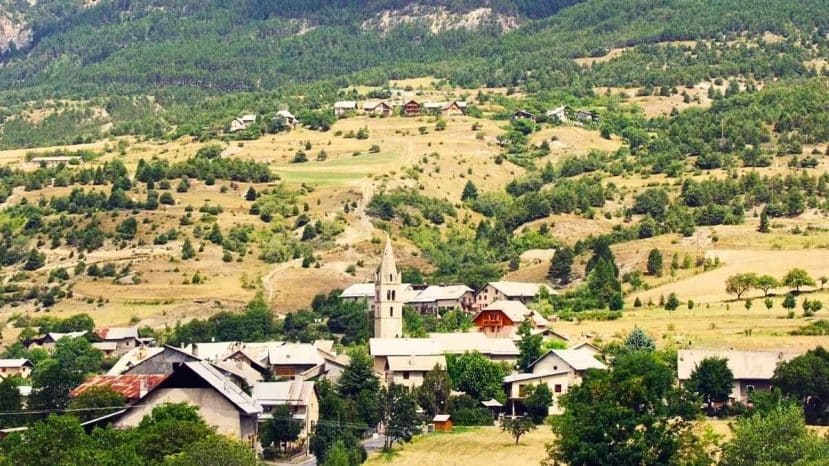


Perched at over 1,000 metres above sea level in the Hautes-Alpes, a village of 170 inhabitants has just joined one of the most selective circles in French heritage. Mont-Dauphin earns the Most Beautiful Villages of France label in 2026, a distinction that crowns a site already recognised on the world stage. For lovers of heritage and alpine nature, this double accolade genuinely changes the picture.
A royal fortress in the heart of the Alps, now one of the most beautiful villages in France
Before earning its new label, Mont-Dauphin is first and foremost a feat of military engineering. It was at the end of the 17th century that Louis XIV ordered its construction with a clear objective: to secure the alpine frontier against the threat of the Duchy of Savoy. To carry out the project, the king entrusted the mission to Sébastien Le Prestre de Vauban, his brilliant military engineer.
Vauban chose a barren rocky plateau commanding both the Guil and Durance valleys. What he designed was not a simple fort but a fully realised fortified town, conceived to house civilians and soldiers alike. The ramparts, the arsenal, the powder magazine and the barracks all stand today as testament to that royal ambition and extraordinary architectural mastery.
Mont-Dauphin, then, is far more than a pretty alpine village. It is an intact, inhabited masterpiece of military urbanism, and now doubly recognised as such.
UNESCO and a national label: a rare double distinction
In 2008, Mont-Dauphin joined the UNESCO World Heritage List. The citadel forms part of a network of twelve major sites fortified by Vauban, spread across France. That international inscription underlines the universal value of the defensive architecture conceived under Louis XIV.
In 2026, the Most Beautiful Villages of France label is added to that legacy. This national distinction, shared with only a handful of communes across the country, rewards both the historic heritage and the exceptional natural setting of the site. Few villages can claim such a combination: a world-class status held for over a decade, and a freshly minted national recognition.
- Construction ordered by Louis XIV at the end of the 17th century
- Designed by Vauban on a rocky plateau at over 1,000 metres above sea level
- Listed as a UNESCO World Heritage Site since 2008
- Part of the network of twelve Vauban sites classified by UNESCO
- New Most Beautiful Village of France label awarded in 2026
- A year-round inhabited village with 170 residents
A living village, between quiet lanes and alpine panoramas
Behind its imposing ramparts, Mont-Dauphin holds an unexpected atmosphere. The lanes are calm, lived-in year-round, and history-laden stone sits alongside unspoilt nature. The village is no frozen museum: it is a place of everyday life, where the quiet rhythm of the ordinary contrasts with the sheer power of the fortifications.
The site also offers spectacular panoramas across the surrounding summits. Mont-Dauphin serves as a natural gateway to two major protected areas: the Parc National des Écrins and the Parc Naturel Régional du Queyras. These two sanctuaries of alpine biodiversity only deepen the village’s appeal for those drawn to wide open spaces.
What this label actually changes for visitors
Joining the network of the most beautiful villages in France means entering a very tight national selection. For visitors, the label works as a reliable benchmark: it guarantees preserved heritage and a quality natural setting. In Mont-Dauphin’s case, it delivers both to a rare degree.
The military heritage is intact and legible: ramparts, arsenal, powder magazine and barracks remain visible, bearing direct witness to the site’s royal history. The village’s geographical position, perched at over 1,000 metres in the Provence-Alpes-Côte d’Azur region, provides a striking alpine backdrop. And the proximity of the Écrins and Queyras natural parks extends the possibilities for exploration well beyond the walls. This newly labelled most beautiful village of France offers an experience that is at once historical and natural, and one that is hard to find anywhere else in the Alps.