After 50, Luxéol experts warn about this autumn hair loss surge


Every autumn, the hairbrush fills up faster, strands accumulate in the shower drain, and anxiety sets in. It happens to everyone, but Luxéol experts Manon Blaevoet and Chiara Bruneau are sounding the alarm specifically for women over 50, for whom the situation takes on an entirely different dimension.
Why seasonal shedding hits harder after fifty
Every year, between September and November, hair loss peaks at its highest level. This seasonal shedding lasts an average of 4 to 6 weeks and affects all age groups. Yet past the age of 50, it no longer manifests in quite the same way.
According to Manon Blaevoet and Chiara Bruneau, specialists at Luxéol, hair is already more fragile and thinner at this stage of life. As a result, seasonal shedding does not simply add itself to an intact hair reserve, it compounds an already weakened situation. The loss becomes visible to the naked eye, where it once went almost unnoticed.
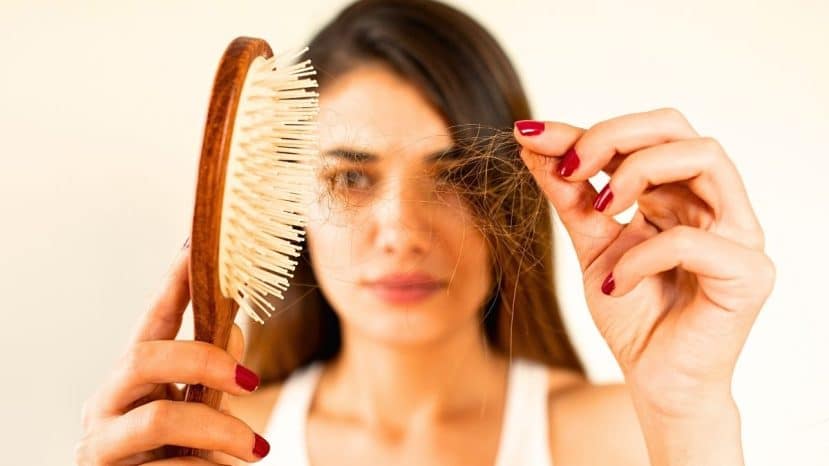
The signs are concrete and hard to ignore: thick clumps caught in the brush while styling, hair that thins at a worrying rate, visibly sparse patches. For the Luxéol experts, passively waiting for the shedding to resolve itself is no longer a reasonable option after 50. Acting early, before the situation becomes difficult to reverse, is the only effective strategy.
Summer: the first culprit behind weakened hair
To understand the full scale of autumn shedding, you have to look back at the preceding months. Summer leaves lasting damage on the hair fibre. Sea salt and pool chlorine build up in the hair throughout the season, leaving it dry, porous and dull.
So by the time seasonal shedding kicks in, hair is already arriving in a weakened state. It has lost much of its moisture and natural lipids, making it even less resistant to fallout. It is this combination, seasonal shedding on top of hair already stripped of its resources, that makes the situation particularly delicate after 50, according to the Luxéol experts.
The 3 concrete steps recommended by Luxéol experts
Faced with this reality, Manon Blaevoet and Chiara Bruneau recommend a three-step response, to be put in place as soon as the summer holidays are over.
- A gentle shampoo to remove the salt and chlorine residue that has built up over summer, without resorting to frequent, aggressive washes that further weaken the fibre.
- A nourishing, reconstructing mask, rich in hydrating agents and active ingredients that replenish the fibre, to be applied several times a week over a few weeks for a visible result.
- A targeted hair supplement course, to work from the inside out, support the follicle at the right moment and encourage regrowth.
- Limiting heat and chemical damage: spacing out colour treatments, reducing the use of heated styling tools, applying a heat-protectant product when necessary, and trimming split and damaged ends.
The first step, gentle cleansing, is often overlooked, yet it determines the effectiveness of everything that follows. By removing summer residue, the hair can rebuild its natural protective barrier and regain its shine. It is an essential starting point, according to the specialists.
Rebuilding the fibre from the inside out
The nourishing mask plays a central role in the recovery strategy. By replenishing a hair fibre stripped of its moisture and lipids, it repairs the damage caused by summer. The experts stress the importance of consistency: several applications per week, over several weeks, are needed to achieve a tangible result.
Nutritional supplementation, meanwhile, works on a different level. By supporting the hair follicle from within, it encourages regrowth at precisely the moment the hair needs it most. For the Luxéol experts, this combined approach, external care and internal support, is the most comprehensive way to get through the autumn period without further compromising hair that is already under serious strain.
Finally, minimising damage during the recovery phase is equally decisive. The heat from styling tools weakens already fragile strands, and chemical treatments such as colouring slow down fibre reconstruction. Trimming the most damaged ends remains non-negotiable, since they cannot repair themselves on their own, regardless of how good the products applied to them are.