
Christmas foie gras: 4 expert tips for easy deveining at home
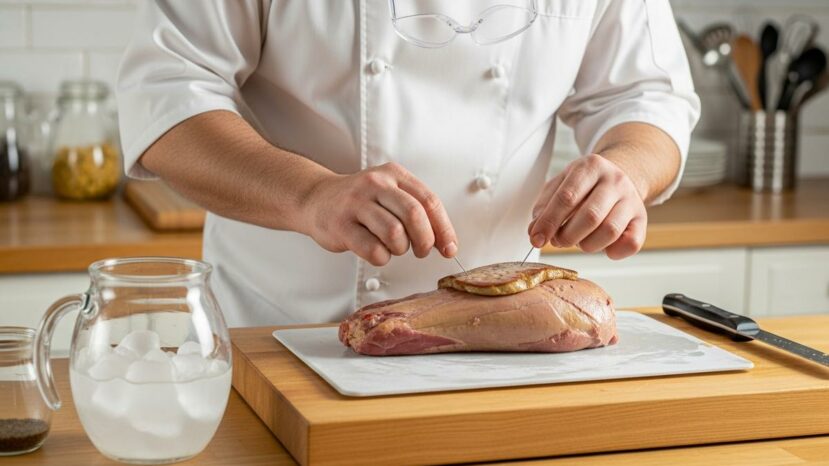


You’re getting ready to host a party, but you’re worried about the homemade stage? Foie gras can be prepared with a few simple gestures and a little forethought, just like when you choose to offer a restaurant in Paris to make a lasting impression.
Deveining foie gras like a pro: safe steps
Start by tempering the raw foie gras at the right pace: take it out of the cold 15 to 30 minutes before the workshop. In this way, the flesh becomes supple without heating up too quickly, and the veins show better, a little like in the kitchens of a top Parisian Michelin-starred restaurant.
Prepare your tools: paring knife, small tongs, thin gloves and cling film. In addition, keep a cold board and a damp towel on hand for greater precision, just like the exacting standards found in iconic establishments such as the Mariage Frères tea salon in Paris.
Gently open both lobes, following the joint with the tip. Next, gently pull the main vein up to the branches, then gently pack the lobe back into shape, as meticulously as a chef preparing a chic and festive New Year’s dinner menu in Paris.
“A soft lobe works better than a hot one.”
Temperature, hygiene and seasoning: the winning trio
Work quickly, on a clean, cold surface: the cold chain protects the flavor of foie gras. Also, rinse and dry your hands as soon as they become greasy, to maintain their grip.
For seasoning, count around 10 g salt/kg and 2 g pepper/kg. Then wrap tightly and leave to rest in a cool place for 12 to 24 hours, to spread evenly.
- Temper the lobe 15-30 min for ideal suppleness
- Prepare knife, tongs, gloves and cold board
- Follow the main vein, then the branches
- Reform the lobe, wrap tightly and cool.
- Allow seasoning to infuse 12-24 h
Gentle cooking and precise service
Montfort, cuvée Grand Héritage du Sud-Ouest in 150 g, is priced at €14.55. A smart format for a test terrine, with an even texture and good cut resistance.
For semi-cooked cooking, aim for a core temperature of around 55-58°C. In this way, the foie gras retains its fine texture; then slice with a lukewarm blade, wiped clean with each pass.
Nos Régions ont du talent offers a 300g half-cooked whole Périgord foie gras at €22.90. As a result, this format is ideal for small tables looking for consistency.
Feyel, in 220 g at €29.90, plays the card of finesse and discreet saltiness. In short, it’s a reference that’s easy to match with a low-sugar jam.
Verifiable purchasing benchmarks
Terres Paysannes offers a 200g whole foie gras “à l’ancienne” at around €14. What’s more, its rustic texture will appeal to those who like a more assertive chewiness.
Labeyrie’s “Tradition” line relies on regular lobes and reassuring calibration. On the other hand, the aromatic palette remains modest for accompanying sweet wines.
Budget, quality and ethics: choosing with confidence
Jean Larnaudie prices whole foie gras at around €90 per kilo. In this way, the salt/pepper balance facilitates pairing with Sauternes or Armagnac.
Lidl Deluxe offers a whole foie gras with Guérande salt, 200 g at €12.80. It’s also a good idea for an impromptu aperitif without blowing the budget.
Another Lidl Deluxe reference: a whole foie gras designed for tight budgets. Secondly, the regularity of the slices helps when serving many guests.
The block version with chunks is for lovers of smooth toast. However, use thin toast to maintain a good bread-to-filling ratio.