
Paris metro: avoid fines for items prohibited on board


Every day, thousands of passengers use the Paris metro to get to work, school or an appointment. And yet, some of the items we carry without thinking about it can cause problems. Here’s a clear guide to avoid unpleasant surprises on your travels.
Forbidden objects: understanding safety logic
To ensure everyone’s safety, certain categories of objects are strictly forbidden in the Paris metro network. Gas cylinders, flammable products and any dangerous chemical substance hazardous chemical substances have no place on trains. This rule is primarily aimed at preventing fires and fumes.
Sharp objects likely to injure, explosives andfireworks are also unambiguously banned. What’s more, cumbersome loads that impede evacuation or block doors may be refused by staff. In short, anything that jeopardizes traffic flow or rapid exit remains prohibited.
Long bars, planks or materials that are much wider than a person poses a real risk in narrow corridors. Consequently, even if there is no chemical hazard, excessive volume may justify refusal of access. The key criterion remains the risk to collective safety.
“Safety takes precedence over convenience: certain items remain off-limits to protect all travelers.”
Special cases: scooters, batteries and bulky items
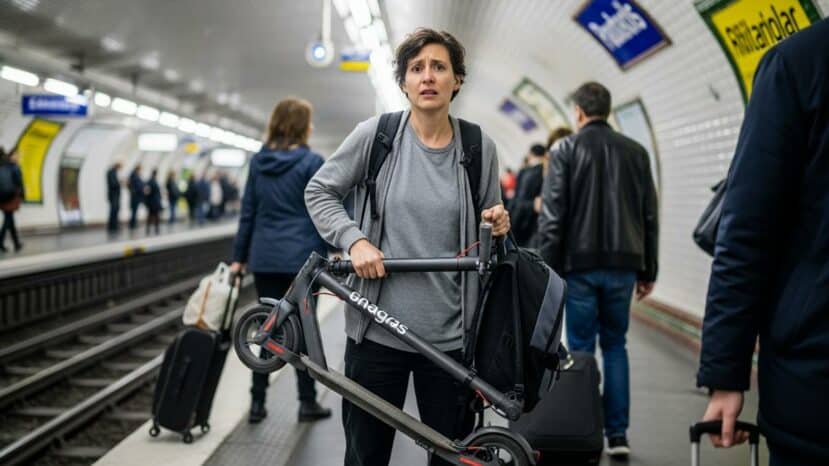
Scooters often raise questions, especially when they’re electric. On the other hand, a folded and controlled machine is more acceptable than a bulky vehicle held askew. Common sense and discretion make all the difference on the quayside.
Lithium batteries are sensitive to shock and heat, which is why extra care is needed in many networks. As a result, certain instructions may change, depending on safety news and operators. Before a key journey, check your options to avoid any blockages on the Paris metro.
- Gas cylinders: prohibited underground.
- Flammable products: refuse them in your bags.
- Unprotected sharp objects: not recommended.
- Bulky volumes: risk of refusal of access.
- Battery-powered machines: variable rules, caution.
Conditionally authorized items: travel without hindrance
The good news is that suitcases are allowed as long as they remain manageable and do not block passage. What’s more, strollers are allowed as long as they don’t compromise access or evacuation. If you’re planning a long journey, be sure to use the elevators and the Paris metro at peak times.
Folding bicycles are tolerated when closed and hand-held. A compact size and careful handling limit friction at gantries. When in doubt about size, choose the most compact solution possible.
Plants and small parcels can be transported if they remain clean and stable. However, it’s best to protect soil and water to prevent leakage. Also, keep odors and clutter to a minimum, so you can stay comfortable when rowing.
Size, time of day and traffic flow
Crowded conditions complicate everything: luggage and strollers quickly become an obstacle in a crowded train. So traveling off-peak makes it easier to accommodate your belongings and reduces stress. You save time and comfort in the corridors.
Take a size you can carry alone, without dragging or bumping into others. For this reason, opt for compact bags and sturdy straps. A well-secured bag simplifies checks and reassures other travellers.
Why these rules: prevention and shared responsibility
The underground environment imposes severe constraints: enclosed spaces, tunnels, controlled evacuations. A simple can of flammable product can trigger a major incident. The rules are designed to control risks, however strict they may appear.
Agents assess the situation in real time, depending on the number of people and the item being transported. What’s more, the same object can be accepted or refused depending on how it is packaged or held. The better protected your belongings are, the smoother access you’ll have to the Paris metro.
In the event of an inspection, be transparent and offer a solution: fold, store, protect. Also, anticipate an alternative if the object turns out to be too bulky for the corridors. This approach avoids blockages and respects everyone’s safety.
Best practices for sensitive routes
Plan your route and choose stations with elevators. This way, you can avoid taking the stairs with a stroller or heavy luggage. Spreading your load over two bags can also help reduce clutter.
Pack anything sharp or fragile, even for a short journey. So use covers, tape and rigid protection whenever possible. In short, the more stable, the more acceptable.
Useful tips before you leave
Do a quick sort: keep the necessities close at hand, put the rest away. Also, check the locks, straps and wheels before entering the station. These simple gestures prevent falls on the stairs of the Paris metro.
Pay close attention to station announcements and signs. This way, you can adapt your choices if a zone is very busy. An alternative route can save several minutes and a lot of peace and quiet.
When in doubt, ask an agent: quick advice is better than a U-turn. What’s more, a small adjustment is often all that’s needed to solve the problem. You can then travel with peace of mind, without compromising safety or the collective experience of the Paris metro.