Louis Vuitton and Chanel top the list of the most counterfeited luxury brands according to the Entrupy 2026 report
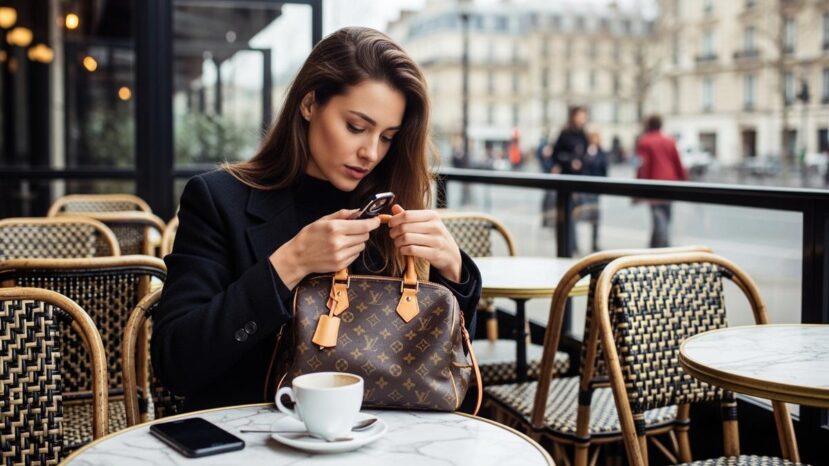


Counterfeiting is hitting the luxury sector with increasing force. According to Entrupy’s 2026 report, Louis Vuitton alone accounts for a third of all products subject to authentication. This puts the French company at the heart of a global phenomenon worth hundreds of billions of dollars.
Luxury goods, a prime target for counterfeiters
Counterfeit products account for 2.3% of world trade, or $467 billion, according to a report by EUIPO and OECD published in 2025. Luxury goods remain particularly vulnerable to this scourge. In 2023, counterfeit goods accounted for around 8% of the sector’s total sales worldwide.
The following year, the authorities seized no less than $110 billion worth of high-end counterfeit goods during raids. These figures testify to a booming parallel economy. Faced with this threat, authentication tools are multiplying.
Entrupy, a New York-based company specializing in artificial intelligence authentication, recorded a +33% increase in requests in one year. The company boasts an accuracy rate of 99.86% on over $3 billion worth of products analyzed. However, 8.1% of items remain unidentified, and therefore potentially counterfeit.
Louis Vuitton tops the ranking
Unsurprisingly, Louis Vuitton dominates the ranking. The company accounts for 33% of all authenticated products, worth $857 million. This omnipresence makes it the favorite target of counterfeiters worldwide.
“Where Louis Vuitton dominates through quantity, Chanel imposes itself through value.”
Gucci stands out less for the volume than for the financial scale of the phenomenon. In 2025, over $17.8 million worth of counterfeit bags were submitted for verification. Prada, for its part, confirms its foothold in the resale market, with almost 9% of requests.
Chanel ranks fourth by volume, with almost 6% of bags deemed unidentified. On the other hand, Chanel accounts for around 13% of the products submitted, with a value of almost $958 million. This amount is the highest in the ranking. Dior completes the top 5 with 5% of submissions and over $221 million in value.
- Louis Vuitton: 33% of products authenticated ($857 million)
- Chanel: 13% of products, highest value ($958 million)
- Prada: nearly 9% of authentication requests
- Gucci: $17.8 million worth of counterfeit bags verified in 2025
- Dior: 5% of bids ($221 million)
Fast-growing brands
The report also highlights houses whose products are increasingly targeted. Between 2024 and 2025, Fendi recorded a +49% increase in submissions. This leap is explained by the Baguette bag’s return to favor with buyers.
Loewe and Bottega Veneta each grew by +45%. Their positioning in line with the Quiet Luxury aesthetic is now attracting counterfeiters. Celine was up +42%, driven by renewed interest in Phoebe Philo’s designs.
These developments show that counterfeiters are quick to adapt to trends. A house that gains in desirability immediately becomes a target. Notoriety thus becomes an increased risk factor.
The revealing case of Goyard
The ranking of the riskiest brands is based on the rate of suspect products. Goyard tops the list with almost 19% of unidentified items. Prada follows with 13%, then Saint Laurent with 10%. Dior reaches 9%, while Louis Vuitton stands at 8%.
Goyard perfectly illustrates the logic of fakery. Not widely distributed and not easily accessible, the brand remains instantly recognizable. Its high desirability, low availability and distinctive visual signature make it an ideal target for counterfeiters.
Materials at the heart of counterfeiting
Beyond logos, materials play a central role in the counterfeit economy. The ranking of the most counterfeited materials is based on the probability of a product being fake. Givenchy canvas tops the list, followed by Prada nylon.
Goyardine canvas by Goyard takes third place. Hermes canvas Herline and Loewe nylon complete the list. These materials, often associated with iconic pieces, are particularly attractive to counterfeiters.
The Quiet Luxury trend further complicates matters. As some houses abandon visible logos, counterfeiters adapt. These sober pieces are sometimes more difficult to imitate on a large scale. Yet they also remain more complex to authenticate. The risk is not disappearing: it is shifting to more subtle forms.
For buyers, vigilance remains the order of the day. Whether buying a Louis Vuitton bag or a piece from a lesser-known house, guarantees of authenticity are essential. The rise of the second-hand market reinforces this demand for transparency.