Nail polish worn every day: dermatologist Marie Jourdan’s advice on nail care


This spring 2026, manicures vie with each other in creativity, with glossy textures, subtle highlights and trendy shades like butter yellow or matcha green. Yet behind these perfectly colored nails lies a risk that is often overlooked. A dermatologist warns of the effects of continuously worn nail polish on the health of our nails.
Wearing nail polish every day: what are the risks for your nails?
Nails may look strong, but they’re fragile. They’re made up of dead cells that no longer have nuclei. Like hair, they contain keratin,” explains dermatologist Marie Jourdan.
These cells form a jigsaw puzzle whose pieces are held together by a cement made of lipids. Nail nail polish disrupts this natural balance, even if it doesn’t directly damage dead cells.
“Nail polish is like rain: it’s good, but not all the time”.
Drying out: an invisible but real phenomenon
Under nail polish, the nail gradually dries out. This process disorganizes the keratin and loosens the cement between the cells. Over time, the nail changes appearance and becomes more sensitive.
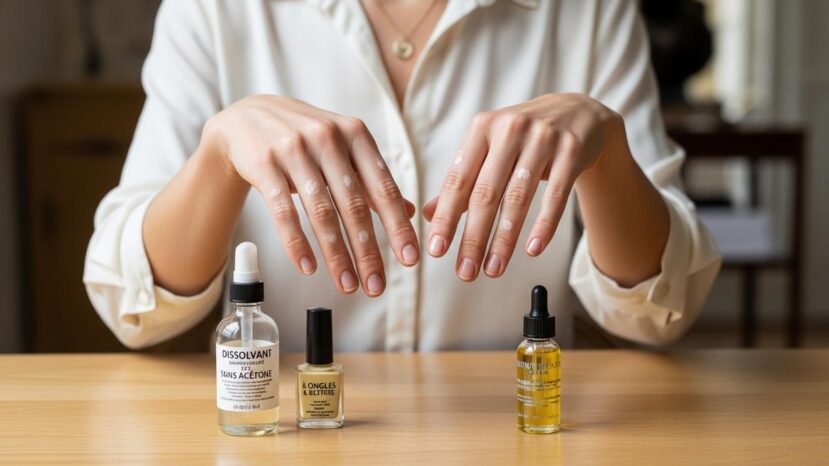
Small white spots or keratin granules may appear. These signs, often trivialized, actually reflect nail dehydration. Dermatologist Marie Jourdan, followed by over 184,000 people on Instagram, warns against these symptoms.
- Progressive drying of the nail surface
- Appearance of small white spots
- Fragility and increased risk of breakage
- Keratin disorganization
- Detachment of lipid cement between cells
Manicure after manicure: a habit worth reconsidering
Multiplying coats of polish or keeping a manicure on for too long damages the nail. It also prevents the nail from breathing properly. Many people are unaware of these effects, as they remain invisible in everyday life.
When nail polish starts to chip or become dull, the temptation to add another coat is strong. But this habit actually makes the problem worse. It’s better to remove damaged nail polish completely.
The choice of nail polish remover also counts. The dermatologist recommends using an acetone-free nail polish remover to preserve natural moisture. In this way, the nail is less exposed to chemical aggression.
How do you remove nail polish without damaging your nails?
When the varnish becomes ugly, it’s best to remove it completely,” advises Dr Jourdan. This step allows you to start again from a healthy base. A mild nail polish remover limits damage to the nail plate.
After removal, it’s a good idea to let nails breathe for a few days before reapplying nail polish. This gives nails time to regain their natural moisture content. As a result, the risk of breakage is reduced.
Should I give up nail polish?
There’s no question of definitively banishing this product that dresses our nails with elegance. Nail polish is a once-in-a-while product,” says the dermatologist. The idea is not to make you feel guilty, but to space out the applications.
Wearing varnish for a special occasion, an evening out or simply to feel more dressed up is perfectly possible. From now on, the most important thing is to avoid wearing nail polish one after the other without a break. Nails need time to recover.
Layering is another habit that needs to be corrected. This practice accentuates dryness and weakens nail structure. In short, moderation is the key to healthy nails.
Nail polish can continue to be part of our beauty routine. All we need to do is adopt a few simple gestures to preserve the long-term health of our nails. That way, the glamorous effect we’re aiming for doesn’t turn into a source of brittleness.