“Nail polish is like rain”: this dermatologist reveals the threshold you should never exceed for your nails


Wearing nail polish on a daily basis may seem harmless, but in 2026, dermatologists are concerned about this habit. Certain signs, such as white patches or nail breakage, point to increasing fragility. So, at what threshold should we be concerned?
What nail polish really does to keratin
Before applying a new color coat, it’s useful to understand the structure of the nail. The nail is made up of dead cells rich in keratin, forming a jigsaw puzzle held together by lipid cement. When this system is disturbed, the nail loses its shine and becomes brittle.
Dermatologist Marie Jourdan, quoted in Femme Actuelle, compares nail polish to rain: beneficial in moderation, but harmful in excess. According to her, nails are made of “dead cells that no longer have nuclei” and “form a puzzle whose pieces are assembled by a cement made of lipids”.
When nail polish is applied day after day without a break, this lipid puzzle gradually becomes disrupted. The nail dries out under the layers of color.
“The nail dries out. And it disorganizes the keratin and loosens the cement between the cells.”
Warning signs to watch out for
Certain clues reveal a nail in pain. Small white dots, keratin granulations or a rough surface indicate dehydration. In addition, a splitting free edge is a warning sign.
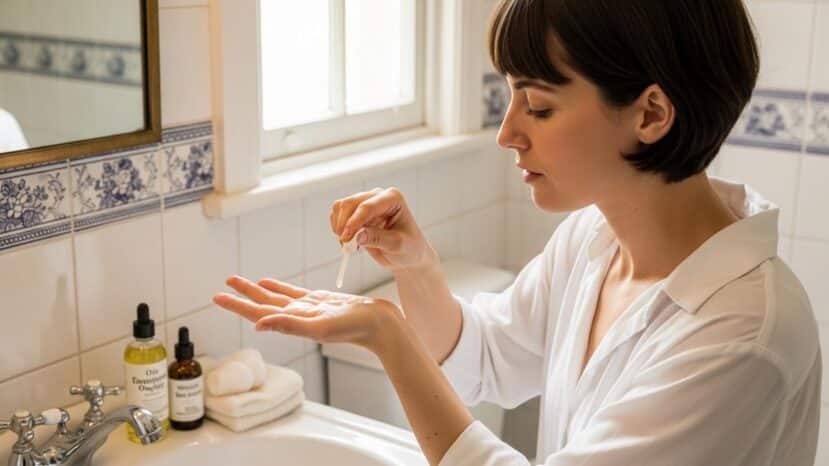
These signals often appear in people who wear nail polish continuously. However, they are reversible if prompt action is taken. Regular massage with a nourishing oil helps restore lost suppleness.
- White spots that multiply on the surface
- Nails that break for no apparent reason
- Grainy surface to the touch
- Splitting free edge
- Dull appearance despite varnish removal
The critical threshold according to dermatologists
Should you banish all nail polish from your routine? Marie Jourdan’s answer is cautious: “Nail polish is a once-in-a-while thing. Specialists recommend keeping nails varnished for about five days out of seven. The remaining two days allow the nail to recover its moisture and suppleness.
This rhythm offers a compromise between aesthetics and health. As a result, there’s no need to give up manicures. On the other hand, manicure after manicure without a break weakens keratin over the long term.
If the warning signs persist despite stopping using nail polish, medical advice may be useful. A dermatologist can check that there are no other causes of nail fragility.
How to remove your nail polish without damaging it further
The method of removal is just as important as the frequency of application. Marie Jourdan recommends removing polish completely “when it gets ugly”, rather than filling in chips. This allows the nail to breathe more often.
The choice of solvent also plays a key role. An acetone-free nail polish remover is less aggressive to lipid cement. After removal, it is advisable to leave nails bare for a few days before reapplying polish.
Vernis 10 free: a gentler alternative for nails
For those who wear nail polish often, the formula counts. Some so-called 10-free, vegan or water-based polishes replace some of the solvents with bio-sourced ingredients. These components come from potatoes, corn, wheat, manioc or cotton.
Some formulas boast over 80% ingredients of natural origin. But that doesn’t mean you don’t need to take breaks between coats. Even with a softer nail polish, the nail needs periods without a colored layer.
In short, choosing a less aggressive formula reduces chemical stress on the nail. Combined with regular breaks, this preserves keratin over the long term.
Adapting your nail polish routine requires little effort. A few days’ break a week, a gentle remover and a more natural formula are all you need to protect your nails and keep your hands looking their best.