
Shortage of dermatologists: three-month wait on average, these alternatives validated by the SFD change the game
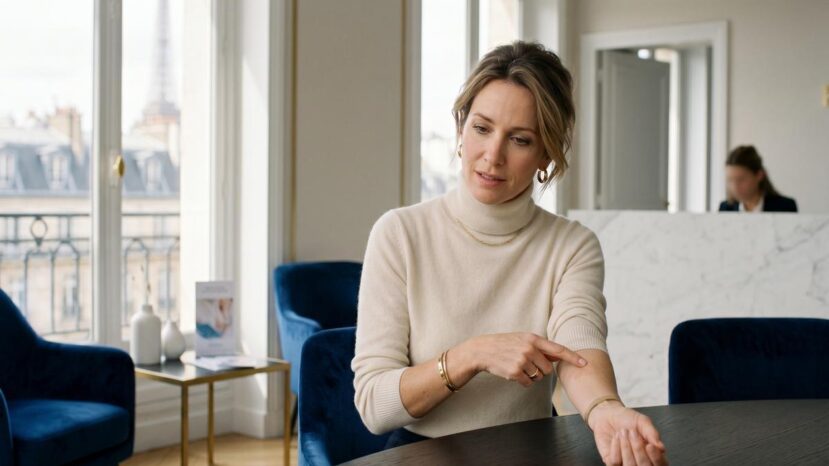


Getting an appointment with a dermatologist in France can be an obstacle course. Between medical deserts and lengthening waiting times, millions of patients suffering from skin diseases find themselves without a quick answer. And yet, concrete solutions validated by healthcare professionals already exist.
A nationwide shortage
The finding is stark: it takes an average of 95 days to get a consultation with a skin specialist in France, according to 2024 figures from the DPC practitioner magazine. In Lyon, this timeframe climbs to 128 days. In the departments of Ariège, Indre, Lozère and Nièvre, there are no practitioners left.
This situation is the result of a 20% drop in the number of practicing specialists between 2007 and 2023. As a result, 16 million French people suffering from a skin condition – eczema, psoriasis and others – have difficulty accessing regular follow-up care.
The French Ministry of Health has announced measures to speed up training and introduce incentives. In the meantime, pro-approved alternatives are being organized in the field.
The general practitioner, the first line of defence against skin diseases
General practitioners now manage almost 80% of dermatological pathologies, particularly in the early or less serious stages. Additional training courses, with or without diplomas, ensure that they are up to date in dermatology. What’s more, when the pathology resists local treatments such as creams or gels, the patient must be referred to a specialist.
Before prescribing an oral treatment, the French Society of Dermatology (SFD) recommends seeking specialist advice. This is where tele-expertise comes into play: this technology, reserved for healthcare professionals, enables photos of a lesion to be submitted to a specialist for an off-line opinion. In 2021, 91% of general practitioners said they would use this technology when faced with a diagnostic doubt in dermatology.
“When the pathology is complicated and/or resistant to local treatments, the patient should be redirected to a specialist.” – Pr. Saskia Oro, dermatologist and President of the French Dermatology Society (SFD)
Tele-expertise is now recognized by the government, and should be more widely deployed in GP practices over the next few years. It is a real time-saver for patients who do not have direct access to a specialist.
Mobil’derm, a mobile practice that goes out to patients
Traditional teleconsultation poses a major problem in dermatology: image quality is not always up to scratch. Blurred or poorly framed photos can distort the analysis of a skin lesion, leading to over-diagnoses, as Prof. Saskia Oro points out. To remedy this situation, the SFD has developed an innovative solution: Mobil’derm.
This nomadic medical practice is a fully-equipped van: examination table, dermoscope, biopsy and cryotherapy equipment. The van is manned by volunteer specialists from the private sector and hospitals, both active and retired, who travel to under-serviced areas.
- The Mobil’derm was inaugurated in early 2026 in the Nouvelle-Aquitaine region.
- It will then cover the Hauts-de-France, PACA and Occitanie regions.
- Around 80% of slots are reserved for patients referred by their GPs.
- Individuals can also book directly on Doctolib by searching for “Mobil’derm”.
- An explanatory letter from the patient is requested to prioritize the most urgent cases.
Available slots are limited, so it’s best to plan ahead. The mobilderm.sfdermato.org/rdv-dermatologie website allows you to consult the next stages of the scheme.
Pharmacists: new players in skin prevention
Prevention plays a central role in the face of declining medical provision. In the summer of 2025, the SFD launched the national “Yes, I CAN!” campaign, focusing on self-screening for skin cancers. In concrete terms, this involves monitoring any spot, pimple or mole that changes size, shape or color, appears abnormal, or has persisted for three weeks or more.
Since the end of 2024, pharmacists have also played an expanded role: they can vaccinate against shingles and assess the severity of certain lesions such as sunburn. However, Prof. Oro reminds us that they are not qualified to carry out examinations, and remain suitable interlocutors only for common, benign problems.
A tele-expertise network dedicated to inflammatory diseases in the Île-de-France region
In May 2024, Île-de-France’s specialized dermatology and venereology care team (ESSDV) created a tele-expertise network focused on chronic inflammatory dermatoses. Via the Omnidoc professional application, doctors in the Paris region – general practitioners, pediatricians, geriatricians, rheumatologists or pulmonologists – can directly question one of the network’s 28 specialists.
This system covers specific pathologies: psoriasis, atopic dermatitis, Verneuil disease, chronic urticaria, alopecia and vitiligo. As a result, a patient treated for psoriasis by a general practitioner can benefit from specialized therapeutic advice without having to wait months.
A common misconception is that the shortage of dermatologists is linked to a massive shift towards aesthetic medicine. In January 2026, the SFD carried out a survey of its members: 25% of practitioners have aesthetic consultations, but these account for only 5 hours a week on average. If aesthetic slots seem more accessible, it’s simply because they’re less in demand. Medical dermatology appointments, on the other hand, go very quickly.
In short, with medical demographics under pressure, these alternatives – tele-expertise, mobile practices, trained pharmacists, specialized networks – can help reduce inequalities in access to skin care across the country.