
Orsay and the Orangerie join forces for the centenary of Monet’s death
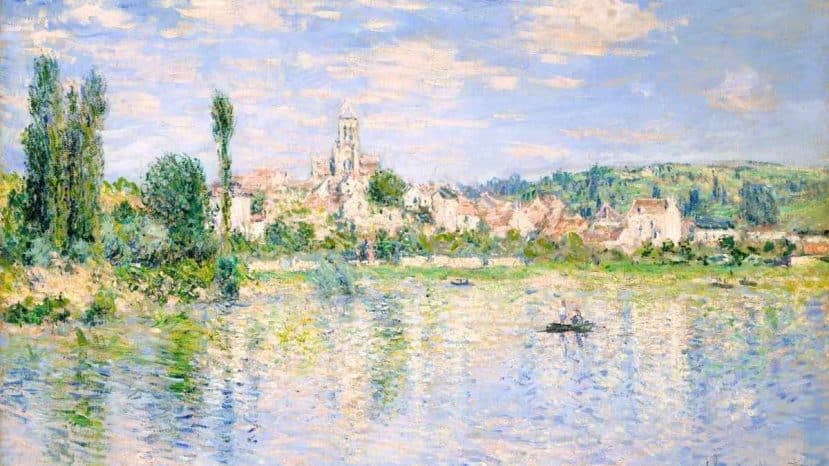


Imagine two Parisian museums combining their strengths to celebrate a single artist: that is exactly what is happening in autumn 2026, to mark the centenary of Monet’s death. The musée d’Orsay and the musée de l’Orangerie are each offering a distinct perspective on the painter’s work, giving visitors a rare and complementary double experience.
The Orangerie and the quest for time: a landmark exhibition for the centenary
It is at the musée de l’Orangerie, in the jardin des Tuileries, that the tribute takes its most ambitious form. The exhibition Monet and Time, open from 30 September 2026 to 28 March 2027, asks a question as simple as it is haunting: how can a painter capture the passage of time on canvas? This question ran through Monet’s entire career, and here it finds a visually arresting answer.
To tell that story, the museum has brought together works from French and international collections. The painter’s most celebrated series are all present: the Haystacks, the Poplars, the Rouen Cathedral, and of course the final paintings made at Giverny. These works reveal an artist who, far from repeating himself, grew ever bolder in his treatment of light and matter as the years went by.
The journey leads naturally to the vast canvases of the Water Lilies, installed in the oval rooms according to the painter’s own wishes. For the centenary of Monet’s death, the Orangerie offers a fresh context for works we thought we knew, placing them at the heart of a broader meditation on time and light.
What you will see at each stage
- The Haystacks and Poplars series, drawn from French and international collections
- The Rouen Cathedral canvases, testament to his method of working in series
- The final Giverny paintings, bolder and more poetic than ever
- The Water Lilies at the Orangerie, installed according to the painter’s own wishes
- The permanent collections of the musée d’Orsay, where Monet enters into dialogue with Renoir, Sisley, Pissarro and Degas
At the musée d’Orsay, Monet at the heart of Impressionism
The musée d’Orsay has chosen a different approach to mark this centenary of Monet’s death. Rather than a dedicated monograph, the institution is shining a light on the artist within its own permanent collections, from 30 September 2026. The choice is a deliberate one: it places Monet back among the group of artists who changed the history of painting.
Moving through the galleries, his canvases hang alongside those of Renoir, Sisley, Pissarro and Degas. This dialogue between works makes it possible to understand how these painters collectively transformed the representation of nature. The atmospheric effects, vibrant brushstrokes and sun-drenched landscapes are a reminder of why this movement came to be called Impressionism, and why Monet remains its central figure.
The visit is also punctuated by talks and readings, designed to deepen the discovery of the artist. Because beyond the paintings themselves, it is an entire way of looking at the world that the musée d’Orsay is inviting us to rediscover.
Two venues, two perspectives on a single genius
What makes this tribute particularly powerful is the complementarity of the two approaches. On one side, the Orsay places Monet within his era and his circle, showing how Impressionism was born out of a collective adventure. On the other, the Orangerie isolates a single question, that of time, to reveal the philosophical depth of a body of work that is sometimes reduced to its decorative beauty alone.
To mark the centenary of Monet’s death, the two Parisian museums are therefore offering distinct but connected experiences. To visit one without the other is to see only part of the picture. Together, they offer a complete portrait of an artist whose work gave its name to an entire movement and continues, a hundred years after his death, to fill the grandest rooms of France’s greatest museums.
Whether you are a devoted Impressionism enthusiast or simply curious, this autumn 2026 double event is a rare opportunity to take the full measure of an extraordinary career, from the earliest canvases to the final Water Lilies painted at Giverny.