Japanese bob searches surge 71% as it becomes the defining haircut of 2026



Choosing a haircut often means navigating the gap between what you love and what actually works for you. The japanese bob cuts through that hesitation: precise, structured, and built to last, it has established itself in 2026 as the cut that reconciles aesthetic ambition with a naturally effortless result. And the numbers back it up.
A meteoric rise that owes nothing to chance
According to a Fresha survey, the term “Japanese bob” generated 55,000 searches in the UK in the past month alone, representing a 71% increase year on year. This spectacular leap is no fleeting trend. It reflects what hairdressers are already seeing in their salons: after several years of soft, deliberately undone styles, precision is making its comeback.
This return to structure is part of a broader aesthetic shift. In 2026, beauty is reinventing itself around considered restraint, far removed from the maximalist looks of the 2010s. The japanese bob embodies this new form of elegance: polished and controlled, yet once worn, it looks almost effortless.
What actually defines the japanese bob
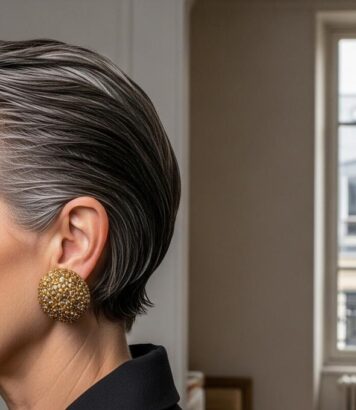
The japanese bob draws on Japanese cutting techniques renowned for their rigour. The length typically falls between the jaw and the collarbone, with little to no visible layering. Everything hinges on the line, the balance, and the management of volume. Unlike softer or more textured bobs, the movement here comes from the cut itself, with no need for waves or artfully dishevelled effects.
Hairstylist Danielle Louise puts it plainly: this cut is all about balance, precision, and control. Clients want hair that looks natural but is actually highly technical. It is precisely this tension between a simple appearance and complex execution that gives the japanese bob its power.
The cut suits straight to slightly wavy hair particularly well, and works best for those who prioritise shape over volume. That said, it does require regular upkeep: touch-ups every six to eight weeks are essential to maintain the clean line that defines the style. Without that commitment, the balance quickly unravels.
Adapting the japanese bob to your face shape
One of the strengths of this cut is its ability to work across different face shapes, provided it is personalised with your stylist. Here is how to tailor it accordingly:
- Oval face: the most versatile shape, which allows the bob to be worn in its most geometric form, at chin length or slightly longer.
- Round face: opt for a length that falls below the jaw to visually elongate the face, with a subtle asymmetry if desired.
- Square face: a japanese bob grazing the collarbone softens angles and rebalances proportions.
- Heart-shaped face: a length sitting between the nape and mid-neck, with discreet volume at the sides, visually widens the lower half of the face.
These adjustments show that the japanese bob is not a one-size-fits-all cut. It is built in dialogue with each person’s features, which gives it genuine versatility.
Variations and everyday upkeep
Several takes on the japanese bob allow it to be adapted to different styles. The version with a blunt fringe, worn thick and sharp, is the most requested: it amplifies the minimalist aesthetic and directly references the codes of contemporary Japanese fashion. For naturally wavy hair, a lightly textured version preserves the precision of the line while letting natural volume provide movement. Some interpretations also extend the cut to the shoulders, creating a lob with a Japanese sensibility that is more versatile for everyday wear.
When it comes to upkeep, a few key steps make all the difference. A smoothing serum applied to damp hair before blow-drying keeps frizz at bay, the number one enemy of this cut. A gentle shampoo followed by a lightweight conditioner maintains softness and shine without weighing the hair down. A weekly restructuring mask and a humidity-shield spray for rainy days round out the routine. Finally, a light hair oil, applied to the ends only and never at the roots, delivers the signature gloss of the japanese bob as a finishing touch on dry hair.
Because that is the whole logic of this cut: it asks for care and discipline, but the result speaks entirely for itself.