
Transport in Île-de-France 2026: changes to metro, RER, streetcar and bus lines
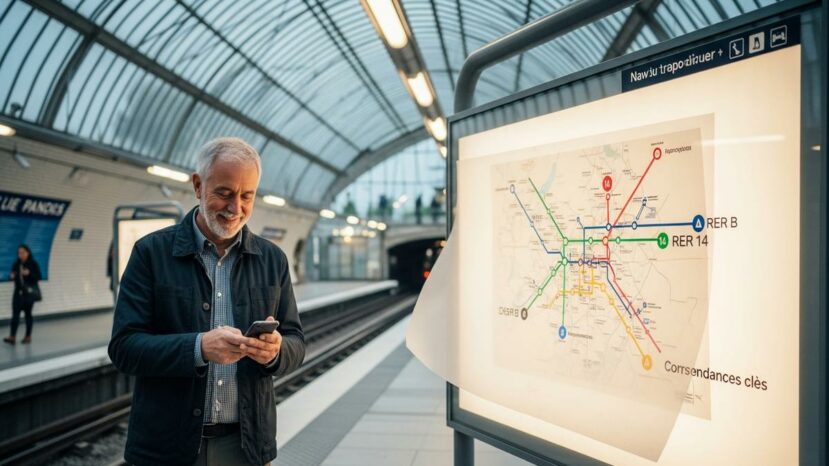


How can we get organized for 2026 without wasting time on transport? New transport developments in the Île-de-France region are taking shape, with key milestones and local uncertainties. This guide provides a clear overview of the expected changes and their practical effects.
What’s new in Île-de-France transport from 2026?
2026 will see targeted openings and service improvements. In addition, a number of projects are reaching a useful stage for everyday users. The regional authorities are announcing a gradual timetable, to limit disruptions and ensure a smooth ramp-up.
Line 18 of the Grand Paris Express is set to reach a milestone between Orly and Massy-Palaiseau. The aim is to provide convenient connections with the RER B and TGV lines, while stabilizing journey times. These new transport services in the Paris region are part of a plan to create a more dense network in the south of the region.
Line 18, RER B and airports: transport news from the Paris Region
RER B is preparing for the gradual arrival of the new MI20 trains. As a result, interior comfort, accessibility and reliability are set to improve with the first trains running in 2026. The first few weeks will be observational, as technical integration requires fine-tuning.
“We want more reliable routes in 2026, with no nasty surprises.”
At airports, bus links such as Roissybus could adapt frequencies and timetables. On the other hand, the extension of metro line 14 to Orly is already redistributing flows. Passengers will benefit from comparing itineraries according to time and luggage.
Fares, Navigo and mobility options in 2026
The price of the Navigo pass remains, at this stage, announced at 90.80 euros per month, subject to budgetary decisions. Thus, the question of shared funding between the Region, Île-de-France Mobilités and employers remains central. New transport services in Île-de-France will also depend on these decisions.
- 2026: milestone for line 18 between Orly and Massy-Palaiseau
- RER B: first MI20 trains in commercial service
- Navigo: current reference at 90.80 euros per month
- Airport buses: possible adjustments to frequencies
- Construction sites: occasional interruptions and dedicated Plan Bs
Subsidies are available for young people, jobseekers and certain target groups. For example, employers can pay half the cost of the subscription, which can lighten the bill. In short, the best thing to do before 2026 is to simulate your fare profile.
From now on, the Navigo application will enable purchase and validation on compatible smartphones. What’s more, in-station validations are more fluid, thanks to modernized gantries. These advances reduce waiting times, while reinforcing control and the fight against fraud.
Work, temporary closures and Plan B
Night and weekend work remains on the schedule in 2026. As a result, some lines will be replaced by substitute buses, with longer journey times. As a result, it’s a good idea to check your itinerary the day before to avoid any hiccups.
The bus network will be adjusted around major hubs, to absorb detours. In addition, dedicated facilities at temporary terminals will facilitate connections. On the other hand, crowds may rise at certain times, especially during timetable changes.
Cap 2030: preparing Île-de-France’s next transportation innovations
Several sections of the Grand Paris Express will arrive after 2026, with staggered openings. Lines 15, 16 and 17 will continue to open in stages. The objective remains clear: to reinforce the ring road and relieve the load on the radial lines.
Accessibility is progressing in waves, with new elevators and audio announcements. As a result, more stations will make journeys easier for people with reduced mobility. Also, improved visual cues will simplify orientation in major hubs.
On a daily basis, the focus is on reliability, legibility and connections. In addition, real-time monitoring of construction sites will help reduce the stress of journeys. Ultimately, new transport solutions in the Paris region should reduce uncertainty and bring the city closer to you.