
“The worst on the market”: a dermatologist warns about the beauty product used by millions of French people every morning.
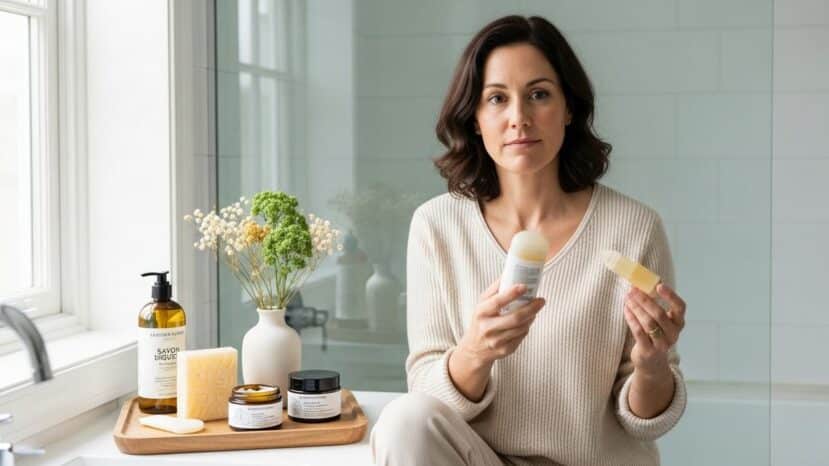


This beauty product is found in millions of French bathrooms. However, dermatologists are sounding the alarm in 2026. Behind its reassuring image, this everyday skincare product could actually be harming your skin.
A popular but controversial beauty product
In the cosmetics aisle, we often choose our skincare products guided by a promise or a pretty picture. In recent years, a clear trend has emerged: “clean”, “natural”, “without this or that”. This way of consuming reassures us and gives us the impression of making a smarter choice for our skin.
In France, this shift is well underway. Brands are multiplying the use of purified formulas, green packaging and shorter ingredient lists. The idea is to offer more respectful skin care products. Dermatologists, however, are far less enthusiastic.
Specialist Divya Shokeen, interviewed by HuffPost, warns about this popular beauty product. According to her, it regularly causes problems in consultations. This stance comes as a surprise, especially given the success of these formulas in France.
“I think they’re the worst thing on the market.”
The blurred meaning of the term “natural
This paradox is largely due to the way these products are perceived. The word “natural” evokes something simple, almost obvious. We imagine that our skin is bound to react better. Except that, in reality, this promise is based on a blur.
As Cedars-Sinai Hospital reminds us, based on the Food and Drug Administration, there is no official definition of this term in cosmetics. As a result, two very different products can claim the same label. This makes the choice difficult for consumers.
- Baking soda can unbalance the skin and cause redness
- Essential oils are among the most common causes of skin reactions
- No official definition of the term “natural” in cosmetics
- Efficacy varies greatly from one formula to another
- Some skins react badly to active ingredients of plant origin
Experts focus on natural deodorants
On the formulation side, certain ingredients widely used in these ranges can be problematic. This is especially true for sensitive areas such as underarms. Baking soda, for example, is often chosen for its absorbent properties. However, it can unbalance the skin and cause redness.
Essential oils, on the other hand, provide fragrance and a “sensory” image. However, they are also known to be among the most frequent causes of skin reactions. In short, we’re talking about natural deodorants, the beauty product that millions of French people use every morning.
Complicating matters further, they don’t all work in the same way. Unlike conventional antiperspirants, which act on perspiration itself, these products rely mainly on absorbents or fragrances. As such, they seek to mask odors rather than prevent them.
Effectiveness therefore varies greatly from one formula to another. What’s more, some skins react badly to this accumulation of active ingredients. Even when they are of plant origin.
How to choose the right skincare product for your skin
Dermatologists advise us not to rely solely on the “natural” label. It’s better to look at the composition in detail before buying a beauty product. Avoid overly scented formulas if you have sensitive skin.
Another approach is to test gradually to see how the skin reacts. This limits the risk of adverse reactions. Patience remains the key to finding the right treatment.
Easier alternatives
Some simpler alternatives, with few ingredients and no potentially irritating agents, may be more suitable. Whether natural or not, these formulas are worth considering. Above all, the aim is to respect the balance of your skin.
Specialists now recommend short lists of cosmetic ingredients. An effective beauty product doesn’t need a complex composition. Simplicity can be synonymous with tolerance for sensitive skin.
Body care is an integral part of our daily routine. Yet every skin has its own needs and reactions. Taking the time to observe these signals allows us to better adapt our cosmetic choices.
In 2026, the “clean” trend continues to appeal in France. However, warnings from dermatologists call for greater vigilance. Natural beauty products are not necessarily safe for all skin types.