
Summer vacations 2026: the Blue Flag unveils the 485 French beaches where it’s safe to swim this summer
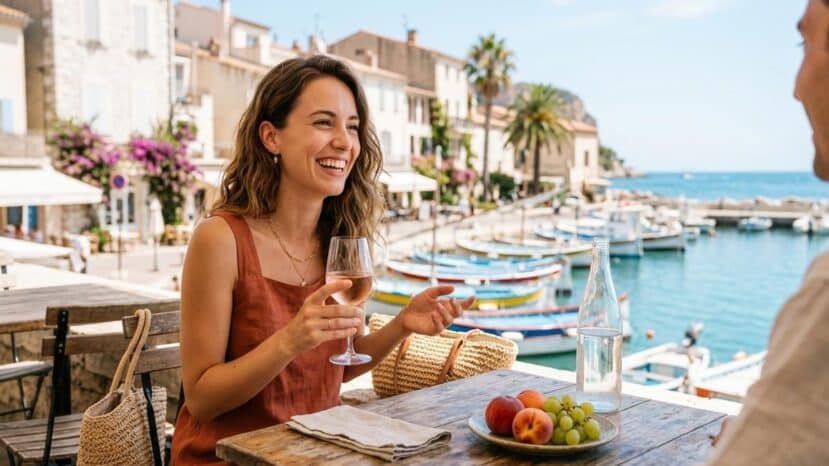


For summer vacations, choosing a quality beach has never been easier. The Pavillon Bleu 2026 ranking has just been unveiled, and it holds some pleasant surprises for families and lovers of the French coastline.
Occitanie tops the Blue Flag ranking for summer vacations 2026
On May 18, 2026, the Teragir association published its new Blue Flag awards. This label rewards beaches and ports that are committed to tourism that is more respectful of the environment and users. This summer, 485 French sites will be able to display the Blue Flag.
Occitanie comes out on top, with 120 sites awarded the label, including 102 beaches and 18 ports. This is not a first: the region was already in first place for the two previous years. It is now firmly established at the top of the rankings.
In second place was Provence-Alpes-Côte d’Azur, with 112 award-winning sites, including 85 beaches and 27 ports. Nouvelle-Aquitaine completes the podium with 52 sites, including 48 beaches and 4 ports.
Worldwide recognition for France’s coastline
For Teragir, these results also confirm that France remains very well placed on a global scale. It is one of the five countries with the highest number of certified sites. This is good news for those who want to enjoy the coast without having to travel far.
For your next summer vacation, this list offers a reliable and practical selection. Labeled sites guarantee a safe, clean and nature-friendly environment.
“The Blue Flag encourages tourist sites to be more environmentally friendly, while at the same time welcoming the public in the right way.”
New sites join the list this year
The 2026 ranking doesn’t just put the regulars back in the limelight. Several new ports have been added to the list. These include Saint-Léger-sur-Dheune in Saône-et-Loire, Nevers in Nièvre and Charleville-Mézières in the Ardennes.
Other ports also join the list: Buzet in Lot-et-Garonne, Vieux Port de Golfe Juan in Alpes-Maritimes and Port Jacques-Yves Cousteau at Castelsarrasin in Tarn-et-Garonne. On the beach front, new awards were presented to Le Tréport in Seine-Maritime, Carqueiranne in Var and Saint-Symphorien-de-Thénières in Aveyron.
In addition, the label does not only apply to fixed sites. Explore Océan’s catamaran Atalaya, based in the port of Hendaye in the Pyrénées-Atlantiques region, is also on the list. Already awarded the label since 2024, it offers whale-watching outings at sea.
- Occitanie will have 120 Blue Flag sites by 2026
- Provence-Alpes-Côte d’Azur boasts 112 award-winning sites
- Nouvelle-Aquitaine wins 52 labels this year
- Several new ports enter the ranking, including Nevers and Charleville-Mézières
- Explore Océan’s catamaran Atalaya, in Hendaye, is the only boat to be awarded the label.
Criteria for obtaining the Blue Flag label
Created in 1985 by Teragir, the Blue Flag is based on precise requirements. Criteria cover biodiversity, water quality, sanitation, waste management, safety, sobriety, accessibility and user information. Each site awarded the label must comply with strict rules.
In concrete terms, animals are prohibited on these beaches in order to preserve water quality. Backcountry camping is not permitted, to limit damage to biodiversity. In addition, a first-aid post must be present and glass collection must be organized.
Special awards for local nature initiatives
The awards also recognize local initiatives through the Prix Thomas Joly. For 2026, the town of Saint-Leu was singled out for its preservation, restoration and awareness-raising work as part of its Atlas of Communal Biodiversity. This is a concrete initiative that goes far beyond the simple management of a beach.
The Port of Saint-Gilles-les-Bains was also rewarded for its participation in the “Nuits sans Lumière” and “Jours de la Nuit” operations. These actions aim to limit light pollution and protect nocturnal biodiversity. Yet these discreet gestures have a real impact on coastal ecosystems.
For summer vacations, these distinctions offer a useful guide. They enable you to choose destinations where the environmental effort is verified, noted and recognized. And when you go to a beach that has been awarded the label, you’re also supporting communities that are taking action for tomorrow’s coastline.
This list provides a solid basis for planning a serene summer holiday. With 485 certified sites across France, holidaymakers are spoilt for choice when it comes to putting down their towels on a safe, environmentally-friendly beach this summer.