“Sunscreen should always be the last step”: Dermatologists warn against this common combination that undermines your protection


With the return of sunny days in 2026, the sunscreen is making a comeback in bags and on bathroom shelves. However, a very common habit could well negate its effectiveness, and dermatologists are sounding the alarm.
A combination that seems practical, but poses a real problem
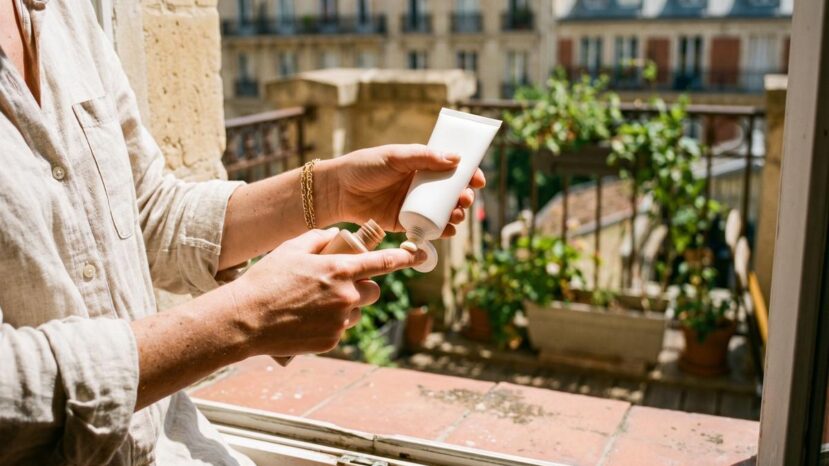
Summer habits come back quickly. The first breakfast on a terrace, the first time you bare your legs—and with them, the return of a duo of products that’s firmly established in beauty routines. Many have gotten into the habit of mixing their sunscreen with another product, either to save time in the morning or to achieve a more flattering finish on the skin.
In practice, this seems like a smart move. It saves time and achieves two results with a single application. However, skin care experts say this approach is a mistake.
The product in question is self-tanner. Many people mix it directly into their sunscreen to achieve both a golden glow and sun protection. This habit, however common it may be, is precisely what dermatologists advise against.
Why the displayed SPF no longer reflects reality
Sunscreen doesn’t provide protection just because you apply a small amount. To be effective, it must form an even, uniform layer on the skin. It is this continuous film that allows the UV filters to block harmful rays.
As soon as you mix the product with another one, that even consistency disappears. Some areas end up well-covered, while others are much less so. As a result, the SPF listed on the tube no longer matches the actual protection provided to the skin.
“Self-tanning products do not provide effective UV protection; therefore, it is essential to apply sunscreen separately, rather than mixing it with another product.” — Dr. Derrick Phillips, consulting dermatologist
Formulas tested individually, for a specific reason
Sunscreens are tested under very specific conditions. Texture, amount applied, and how it’s spread on the skin: each factor is carefully calibrated to ensure the stated level of protection. Therefore, as soon as the formula is changed, the results become unpredictable.
As Dr. Derrick Phillips explains: “Mixing them with another product can affect how they’re distributed on the skin and, as a result, reduce their actual effectiveness. ” Furthermore, having a darker tan does not mean you are better protected from the sun. This is a common misconception that dermatologists regularly point out.
That said, there’s no need to give up self-tanning altogether. There is a solution, and it’s simple: just make sure to space the two steps out.
- Apply the self-tanner separately from the sunscreen; never mix the two.
- Apply the self-tanner the night before, not in the morning before you go out.
- Let the product sit for six to eight hours to allow it to develop properly.
- Apply sunscreen only the next day, once your tan has set.
- Follow this golden rule: always apply sunscreen as the final step in your skincare routine.
A six- to eight-hour gap—a simple rule to remember
Most self-tanning formulas take six to eight hours to work properly on the skin. Applying the product the night before allows the tan to develop gradually, without interfering with the next day’s sun protection.
Also, this routine doesn’t require any sacrifice. You can definitely enjoy both products, as long as you don’t apply them at the same time. The only change you need to make is the order and timing of application.
Always apply sunscreen last
Dermatologists all agree on this point: sunscreen should always be the final step in your skincare routine before sun exposure. No other products should be applied at the same time.
So, mixing self-tanner and sunscreen in the palm of your hand before applying it dilutes the UV filters and weakens the protective barrier. The risk is uneven protection, which neither your skin nor your eyes can detect.
In addition, the tan achieved with a self-tanner does not alter the skin’s natural ability to protect itself from UV rays. The deeper, more golden color is purely cosmetic. Therefore, it is in no way a substitute for sunscreen that has been properly applied to clean, dry skin.