140 hours of work went into Harriet Sperling’s wedding dress: the designer reveals the hidden detail in the train


The wedding of Harriet Sperling and Peter Phillips, held on June 6, 2026, captivated fashion lovers far beyond the borders of the United Kingdom. The wedding dress worn that day bears a highly anticipated signature, and the designer reveals its secrets down to the finest detail.
Emilia Wickstead, the designer behind the wedding dress
New Zealand designer Emilia Wickstead designed Harriet Sperling’s wedding dress. Her name is already a fixture in the royal wardrobe. For example, Kate Middleton wears her designs very regularly.
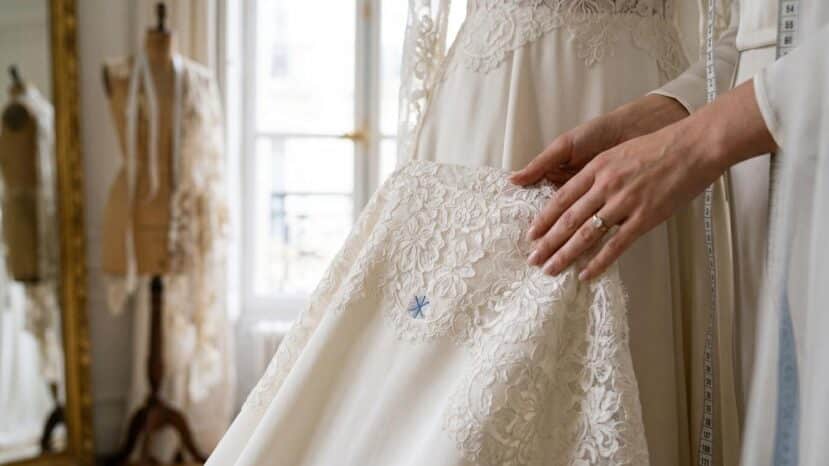
For Harriet Sperling, the newest member of the Windsor family, the goal was clear: an elegant and romantic dress. In addition, the designer chose to share a behind-the-scenes look at her work in an Instagram post, offering a rare glimpse into the creative process.
This royal wedding is part of a particularly busy wedding season in 2026. The ceremony also caught the attention of international fashion observers, who were eager to see what outfit Harriet Sperling would choose for her big day.
Expertise measured in hours
The design of this bridal gown was not left to chance. According to Emilia Wickstead, it took 140 hours of work to create the gown. That figure alone illustrates the sheer scale of the craftsmanship involved.
The designer also explained the vision that guided her work. Behind every decision was a specific idea, which she shared publicly on Instagram.
“a dialogue between tradition and modernity”
Fabrics and cut at the heart of the design
The wedding dress is crafted from two luxurious fabrics: Italian silk crepe and French lace with a floral pattern. These elements give the gown a texture that is both light and refined. Every detail reflects exceptional craftsmanship.
The design also features a three-meter train, inspired by the early 19th century. This historical reference anchors the creation in a long tradition of royal wedding attire. As a result, the dress clearly evokes a fairy-tale atmosphere.
This choice of materials and silhouette is no accident. However, this is not an outfit stuck in the past: the modern cut and contemporary finishes remind us that the designer is, above all, seeking a balance between eras.
- It took 140 hours of work to create the outfit
- Materials: Italian silk crepe and French lace with a floral pattern
- A three-meter train, inspired by the early 19th century
- The designer’s vision: a dialogue between tradition and modernity
- Details shared by Emilia Wickstead in an Instagram post
The Pragnell tiara: the perfect finishing touch
To accessorize her wedding gown, Harriet Sperling chose a tiara, a traditional piece of jewelry worn by royal brides. This particular tiara has a specific name: the Pragnell tiara. According to Paris Match, it officially belongs to the London jeweler who also created Harriet’s engagement ring, as well as her wedding earrings.
This cohesive pairing of clothing and jewelry gives the look a rare sense of unity. Moreover, each piece seems to have been designed to fit seamlessly into a look that is perfectly coordinated from start to finish.
A regal wedding dress that makes history
Harriet Sperling’s wedding dress now joins the ranks of iconic royal bridal gowns that have defined their eras. The gown combines exceptional materials, meticulous craftsmanship, and a strong creative vision. Furthermore, it is designed by a designer already well-known to the British royal family.
Peter Phillips is the son of Princess Anne of England. As a result, the wedding held on June 6, 2026, was closely watched by both members of the royal family and fashion enthusiasts around the world.
This creation by Emilia Wickstead cements the New Zealand designer’s status as a leading figure in royal bridal fashion. As such, the wedding dress worn by Harriet Sperling will remain a landmark piece in the history of style within the Windsor family.