
No more red LED for skin with redness and facial care: this new light therapy color soothes the skin in as little as four weeks
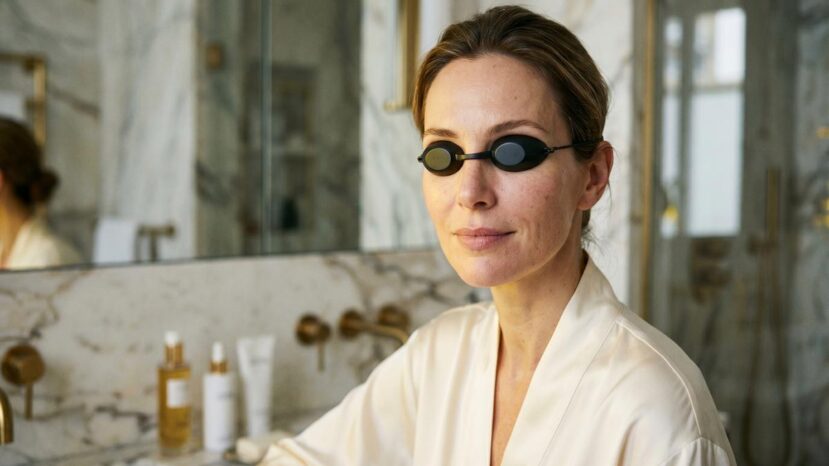


Yellow LED light is quietly making its mark in bathrooms in 2026, and people with sensitive skin are beginning to discover something in it that red LED light didn’t offer them. This next-generation facial treatment promises soothing, radiance, and reduced puffiness—but it all depends on how and for whom it’s used.
What Yellow LED Light Really Does to Your Skin
Yellow light therapy uses low-intensity light. Its wavelengths range from 570 to 590 nanometers. As a result, the light is concentrated in the upper layers ofthe epidermis.
Red light, on the other hand, penetrates more deeply, reaching the dermis and muscles. By acting on the skin’s surface, yellow light helps regulate cellular activity to soothe inflammation, reduce redness, and promote overall skin comfort.
This yellow-light facial treatment specifically targets the areas where tightness, redness, tingling, and visible broken capillaries occur. That’s what sets it apart from red LED therapy, according to New York dermatologist Dr. Shereen Teymour.
“The yellow light specifically targets the area where tightness, redness, tingling, and visible small blood vessels occur, without penetrating as deeply as the red LED.” — Dr. Shereen Teymour, dermatologist
Why Does Yellow Light Complement Red Light?
The first wave of LED masks focused mainly on two colors: red to stimulate collagen production and combat aging, and blue to treat blemishes. However, many people prone to redness found that these masks didn’t fully meet their needs.
Dr. Shereen Teymour notes that her patients report that yellow light gives them a more radiant complexion, a more even skin texture, and a feeling of reduced puffiness. These are benefits that red LED light, which is designed for anti-aging, does not provide in the same way.
In addition, Dr. Manoj T. Abraham, a facial plastic surgeon, points out that this wavelength stimulates lymphatic circulation. This gentle drainage makes it an effective tool for speeding up recovery after in-office procedures or soothing rosacea-related redness by helping to constrict the skin’s capillaries.
How to Incorporate This At-Home Facial Treatment into Your Routine
For home use, consistency is much more important than intensity. Dr. Shereen Teymour generally recommends two to five sessions per week, lasting ten to twenty minutes each, when starting out.
The first improvements should be noticeable after four to six weeks of diligent practice. The results are more pronounced after eight to twelve weeks of regular practice.
Some people alternate between yellow light on days when their skin is more sensitive and red light when their skin tolerates anti-aging treatments better. In this way, the two colors complement each other in the same weekly facial care routine.
- Wavelengths of yellow light: between 570 and 590 nanometers
- Recommended frequency: two to five sessions per week, lasting ten to twenty minutes
- First visible improvements: after four to six weeks
- More noticeable results: between eight and twelve weeks
- Wearing safety glasses is recommended during each session
Precautions to Be Aware of Before You Begin
Yellow light is non-invasive and UV-free. The reported side effects are rare and mild, especially when usage instructions are followed.
Anyone undergoing treatment or suffering from a photosensitizing condition should consult their doctor before starting this type of facial treatment. As a precaution, it’s also wise not to combine a session with a strong at-home peel on the same evening.
For which skin types is this brightening treatment truly suitable?
This yellow light facial treatment is primarily designed for reactive skin that is prone to redness, early-stage rosacea, or skin that has been weakened by previous treatments. Most skin types can use it, but it is still advisable to consult a doctor if you have a skin condition or are undergoing intensive treatment.
Compared to red LED light, yellow light thus addresses a different need. It bridges the gap between deep anti-aging stimulation and the daily needs of irritated skin. That’s why this new light-based facial treatment appeals to those who have never been satisfied with traditional LED masks.
The two wavelengths also complement each other very well: the red wavelength targets deep anti-aging, while the yellow wavelength soothes and brightens the skin’s surface. Many people prefer to alternate between the two on different days rather than doing everything in a single session, in order to be mindful of their skin’s tolerance.
However, people undergoing photosensitizing treatment or with an active skin condition should consult a doctor before incorporating this brightening facial treatment into their daily routine. Caution is still advised, even with light that is considered gentle.