
After red light, why is yellow light making its way into our beauty routines and changing everything for sensitive skin?
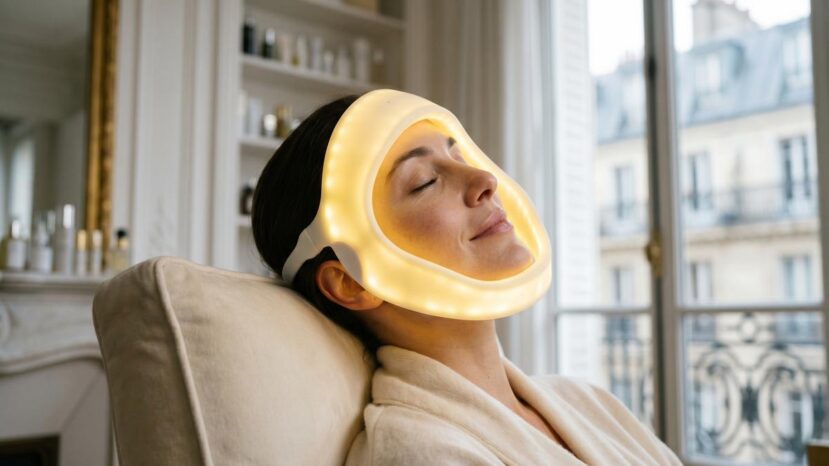


LED masks have transformed our beauty routines by promising visible results in just a few minutes. For a long time, two colors dominated the conversation: red for anti-aging, blue for acne. However, a third wavelength is gradually gaining ground, and the yellow light is now attracting the attention of experts.
A treatment that targets the superficial layers of the skin
Yellow light therapy uses wavelengths ranging from 570 to 590 nanometers. As a result, it acts on the superficial layers of the epidermis, whereas red light, which has a longer wavelength, penetrates all the way to the dermis and the underlying muscles.
This surface-level treatment makes all the difference for sensitive skin. Red light, on the other hand, targets deeper issues such as sagging or deep wrinkles. The two wavelengths therefore address distinct needs.
New York dermatologist Dr. Shereen Teymour describes it in the magazine NewBeautyas a low-intensity light therapy. It interacts with cellular processes to soothe inflammation, reduce redness, and support overall skin health.
“A low-intensity light therapy that interacts with cellular processes to soothe inflammation, reduce redness, and support overall skin health.” — Dr. Shereen Teymour
Why Sensitive Skin Benefits from It
Sensitive or reactive skin often has difficulty tolerating overly intense treatments. Therefore, a gentle, non-invasive therapy like this one is a suitable option for these skin types.
In addition, yellow light contains no UV radiation. Side effects are rare and mild, making it an option accessible to a wide range of people.
Tangible benefits reported by patients
According to Dr. Teymour, patients regularly report a more radiant complexion, a more even skin texture, and a noticeable reduction in puffiness. These effects are observed after several weeks of regular use.
However, yellow light also has a lesser-known benefit: it stimulates lymphatic circulation. This effect is highlighted by facial plastic surgeon Dr. Manoj T. Abraham.
As a result, this wavelength becomes a valuable complement to in-office treatments. It also helps reduce the redness associated with rosacea by constricting the skin’s capillaries, according to Dr. Abraham.
- A brighter, more even complexion after several weeks
- Reduces redness and inflammation
- Stimulation of Lymphatic Circulation
- Support for Recovery After In-Office Treatments
- Relief from redness associated with rosacea
A benefit for rosacea and post-treatment recovery
People with rosacea often seek gentle, well-tolerated treatments. From this perspective, yellow light therapy meets this need by acting directly on the skin’s capillaries.
In addition, after an in-office treatment, the skin may remain red or swollen for several hours. According to Dr. Abraham, using this wavelength as a complementary treatment can speed up recovery.
How to Incorporate Yellow Light into Your Routine
Consistency trumps intensity. Results are built over time, not in a single intensive session.
Dr. Teymour recommends two to five sessions per week, lasting ten to twenty minutes each, during the initial phase. The first signs of improvement typically appear after four to six weeks of regular practice.
For more noticeable results, it takes between eight and twelve weeks. Patience is therefore essential to fully enjoy the benefits of this golden wavelength.
In addition, there are two precautions worth noting. Wearing protective eyewear is recommended during each session. Anyone taking photosensitizing medication should also consult their doctor before using yellow light.