This Parisian landmark is getting a €52.8 million glass pavilion – and not everyone is happy
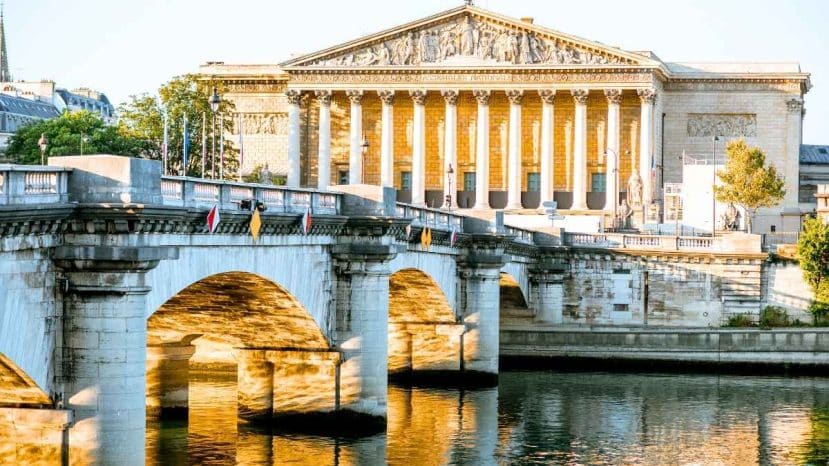


A curved glass pavilion costing €52.8 million could soon take shape alongside one of Paris’s most iconic landmarks. The project to rebuild the visitor reception building of the Assemblée nationale, which had been put on hold, is back in the spotlight after the City of Paris gave it the green light. Its return has sparked fierce opposition from heritage preservation advocates.
A colossal budget to transform the entrance of a Parisian landmark
The project involves the complete reconstruction of the reception building located to the north-west of the Palais-Bourbon’s colonnade. The new structure will span 4,000 m² and bring together a wide range of functions. It will house a visitor space, a cafeteria, a shop, an auditorium, and an immersive, educational civic trail.
Underground spaces are also included in the plans. Taken together, these changes represent a profound transformation of the entrance to this Parisian landmark – far beyond a simple facade renovation.
It is the exterior design that has drawn the most criticism. The proposed facade is entirely glazed, curved in shape, and takes its inspiration from the columns of the Palais-Bourbon. For heritage protection associations, this architectural choice is considered indefensible alongside the site’s classical architecture.
Regulatory hurdles cleared, not without controversy
The road to this construction project has not been straightforward. In June 2026, the Paris city council had refused the building permit. Two main reasons explained the blockage. First, the height of the new building exceeded the limits set by the Plan de sauvegarde et de mise en valeur (PSMV), which strictly governs urban planning in this part of the 8th arrondissement. Second, national legislation prohibits excavation of protected subsoils, making the planned underground spaces illegal as designed.
To work around these restrictions, the Assemblée nationale submitted a request to amend the PSMV. The City of Paris granted this amendment in July 2026. The decision immediately triggered a backlash on social media, notably from Stéphane Bern and the association Sites et Monuments, who condemned it as an attack on the heritage of the Seine riverbanks.
- Floor area of the future building: 4,000 m²
- Total budget: €52.8 million
- Initial building permit refusal: June 2026
- PSMV amendment granted by the city: July 2026
- Project initially suspended since February 2026
President Braun-Pivet faces persistent opposition
It was the president of the Assemblée nationale, Yaël Braun-Pivet, who had championed the construction proposal put to a vote. The project had nonetheless been suspended as early as February 2026, under pressure from its opponents. Its return to the table, made possible by the PSMV amendment, has reignited a debate that seemed to have been settled.
Defenders of Parisian heritage, including the association Sites et Monuments, have launched a petition against the project. They argue that this Parisian landmark deserves strict protection and that the new pavilion would disfigure the setting of the Seine riverbanks. Their mobilisation on social media has amplified the controversy surrounding the project.
Further approvals still needed before any work can begin
Despite the PSMV amendment, the project is not yet a done deal. The Assemblée nationale must still obtain several additional authorisations before construction can begin. This Parisian landmark therefore remains untouched for now, and the outcome of the matter remains uncertain.
The tension between the desire to modernise the institution’s visitor facilities and the preservation of the architectural setting of this Parisian landmark reflects a recurring debate in Paris. Amending the PSMV in a district as tightly regulated as the 8th arrondissement is no small matter. Every decision of this kind sets a precedent for future projects in other protected areas of the capital.
The file remains open, and the next expected authorisations will determine whether this Parisian landmark will or will not see a glass pavilion installed at its side in the years to come.