Why serums have taken over our hair, body and even our makeup
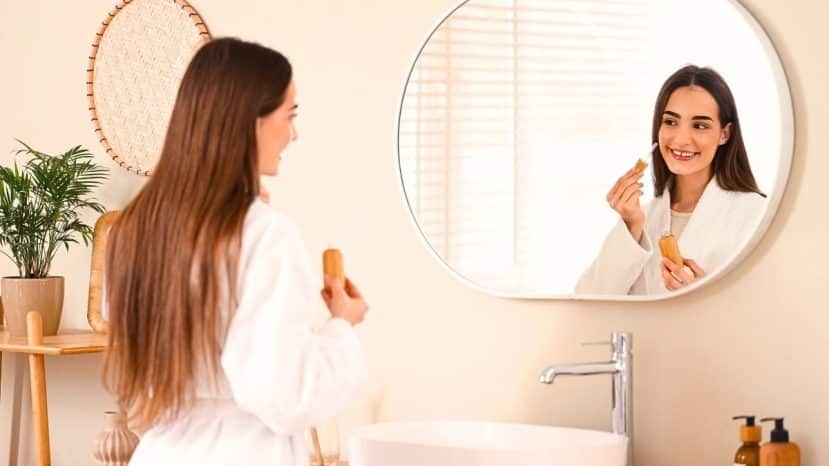


You adopted a serum for your face, then another for your hair, and now your foundation contains one too. This gradual shift towards lightweight, targeted formulas is fundamentally changing the way we think about everyday beauty. Serums are no longer confined to a single step in the routine: they’ve made their way into everything, from the scalp to the makeup bag.
From body to scalp, serums are spreading well beyond the face
For a long time, reaching for a serum almost automatically meant talking about skincare. The logic was straightforward: target a specific concern with active ingredients, whether that meant hydration, texture, pigmentation or signs of ageing. That reputation also rests on cosmetic formulation itself. A review published in Colloids and Surfaces B: Biointerfaces highlights the importance of delivery systems in cosmetic products, which can help protect active ingredients and support their targeted release.
But what worked for the face now applies to the rest of the body. Vogue notes in 2026 that consumers are transferring the principles of their facial routine to their bodies. Ingredients such as retinoids, ceramides and peptides are no longer reserved for face care. Certain skin concerns, dryness, hyperpigmentation, breakouts and texture, show up below the neck too.
Texture plays a concrete role in this appeal. A body serum, lighter than a traditional cream, suits people who want hydration without the feeling of a heavy layer sitting on the skin. That said, dermatologists interviewed by Vogue point out that skin thickness and characteristics vary across different areas of the body. Some actives, retinoids in particular, can cause irritation depending on where they’re applied. A face serum cannot, therefore, automatically be used everywhere.
Hair “skinification”, or when the scalp becomes skin like any other
The same movement is reshaping hair care. Vogue describes this phenomenon as the “skinification” of hair: consumers are beginning to treat the scalp as an extension of the facial skin. Hair routines are borrowing codes from skincare, with targeted ingredients and products designed to address a specific concern.
Vogue Business reports growing interest in hair serums targeting hair loss, density, scalp health, repair and shine. What’s more, these products are no longer aimed solely at the roots. Smoothing serums are also used on the lengths to reduce frizz, boost shine and make styling easier. British Vogue describes these formulas as treatments designed to improve softness, manageability and the overall appearance of hair.
What serums actually deliver, depending on how they’re used
- Face: targeting a specific concern with active ingredients such as retinoids, ceramides or peptides.
- Body: a lightweight texture suited to those who want hydration without heaviness, using actives similar to those found in face care.
- Scalp: targeted treatment for hair loss, density or scalp health, following a logic close to skincare.
- Lengths: smoothing serums to reduce frizz, improve shine and make styling easier.
- Makeup: foundations and tinted products enriched with hydrating ingredients, for a natural, luminous finish.
When makeup borrows the language of skincare
The phenomenon takes on a particular dimension when it steps entirely outside the skincare category. Makeup is now drawing on the vocabulary of skincare. So-called “serum” foundations are the most visible example: Allure dedicates an entire category to them, describing them as products that combine coverage with ingredients traditionally associated with skin care.
Some tinted products adopt the same positioning, with formulas enriched with hydrating or skin-supporting ingredients. This shift reflects a change in taste: heavy, full-coverage textures have given way to natural, luminous finishes. The serum has become a middle ground between pigment that evens out the complexion and a lightweight texture that feels closer to skincare.
A word that has become a language, not just a category
Part of the reason these products are multiplying so rapidly is that the term itself has become extraordinarily flexible. A serum today can be aimed at the face, the body, the scalp, the lengths or the complexion. What they share is not an identical composition, but a common promise: a lightweight, targeted product built around specific benefits.
Science does, however, add an important nuance. The simple fact that a product is presented as a serum does not automatically guarantee better penetration or superior efficacy. The skin is a complex barrier, and absorption depends on the properties of the molecules, the formulation and the condition of the skin. At its core, what may explain the lasting appeal of the phenomenon is this: we no longer just want to moisturise, we want to target a concern, choose our actives and understand what we’re putting on our skin. From the face to the makeup bag, serums have become the symbol of a beauty world increasingly shaped by skincare thinking.