
Hairdresser: 3 haircuts to avoid after age 50 because they make you look older
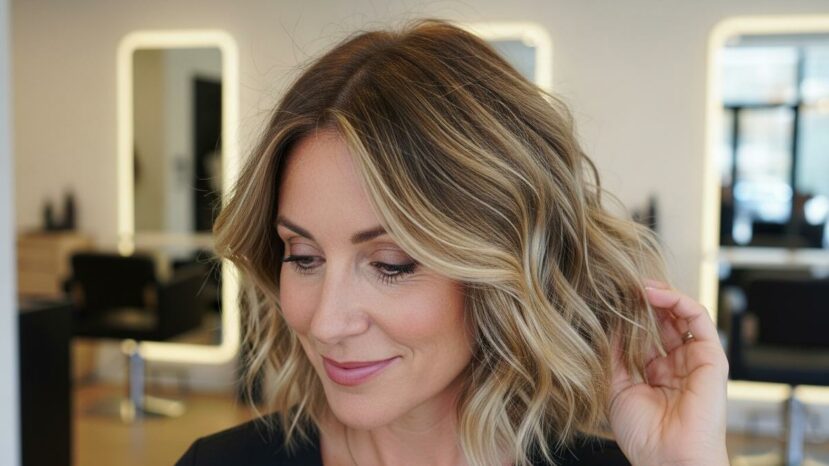


After a certain age, a hairdresser sees more than just a haircut: he or she reads your features, your style and your habits. After 50, some hair choices can harden the face, but others simply brighten it.
Three cuts that can age the face after 50
The pros’ first warning: the very strict jawline. It freezes the lines, yet the face benefits from remaining mobile. A hairdresser often suggests a soft lob: the length goes down a little, so the lower part of the face can breathe.
Second pitfall: the very tapered gradient, which thins the ends and takes away volume where it’s needed. What’s more, very long, flat hair pulls the lines. Professionals quoted by Grazia, such as Gina Rivera and Raphaël Perrier, point out that movement softens the look. But it all depends on the hair’s natural thickness and texture.
What the pros recommend for softening
Add relief around the cheekbones and temples: a few soft waves, a slightly offset parting, or a curtain fringe. In this way, the eyes open up and the face becomes more dynamic. A hairdresser then adjusts the length around the neck to avoid the “helmet” effect. In addition, a longer lock near the jawline breaks up the angles.
“One centimetre of well-placed movement can rejuvenate more than ten centimetres cut at random.”
Texture counts as much as shape. That’s why moisturizing and gentle styling make all the difference. Air-drying, followed by a light sweep with a wide iron, offers a natural wavy look. Also, a hairdresser prefers diffused volume rather than a fixed bulge.
The third golden rule is to plan maintenance. Touch-ups every 6 to 8 weeks are better than a major seasonal transformation. A hairdresser will follow the regrowth, rebalance the gradation and adjust the fringe. In short, the cut stays alive, not rigid.
- 3 cuts to watch out for: ultra-straight squares, overly tapered gradients, very flat lengths.
- Choose a wavy lob and a long, soft, structured gradation.
- Move the parting; adopt a curtain fringe if the forehead is marked.
- Partially air-dry, then texturize without cardboarding.
- Regular appointments with your hairdresser to stay on track.
What we learned from the Grazia article
The topic focuses on what ages “most” after 50, according to salon pros. Thus, the overall shape of the cut, the distribution of volume and the cut line near the jaw play a key role. In addition, references to celebrities such as Demi Moore, Julia Roberts and Monica Bellucci illustrate that length alone is not enough. Instead, success depends on thickness, density and maintenance.
The experts quoted – including Gina Rivera and Raphaël Perrier – insist on details that are easy to apply. Thus, a slightly off-center parting, a wisp that caresses the cheekbone, or adjustable bangs add softness. A hairdresser also adjusts the cut so that the movement falls in the right place. The aim remains the same: to balance and visually lighten, without overly tapering.
The message is pragmatic: avoid overly rigid lines when skin demands fluidity. A lively cut erases the severe effect of graphic cuts. What’s more, a supple texture draws attention away from marked areas. As a result, a follow-up with your hairdresser keeps the cut consistent over the weeks.
Color and texture: allies in softening
When it comes to color, opt for warm highlights and measured contrast. For example, a subtle sweep close to the face adds light without freezing. In addition, a gloss enhances shine without weighing down the fiber. A hairdresser will dose these shades according to your skin tone and white hair.
Preparing for your next appointment at the show
Before taking your place, list two specific objectives: softening the jawline and brightening the eyes, for example. This way, you’ll guide the dialogue with the hairdresser. In addition, arrive with two realistic photos, close to your texture. On the other hand, avoid models who require daily blow-drying if this is not your routine.
During the exchange, ask where the volume will be placed and how the cut will evolve as it grows back. As a result, you’ll know when to come back and what to style at home. Also, set a simple routine: a weekly moisturizing treatment and a light defining cream. Your hairdresser can adjust these steps to suit your density.
After the cut, observe the ease of styling over two or three days. This way, you can check whether the shape holds effortlessly. Also, take note of what you like less for the next adjustment. In short, a good hairdresser prefers regular follow-up to an overly radical promise.