Château de Versailles: an immersive tour transforms the Grand Dauphin exhibition
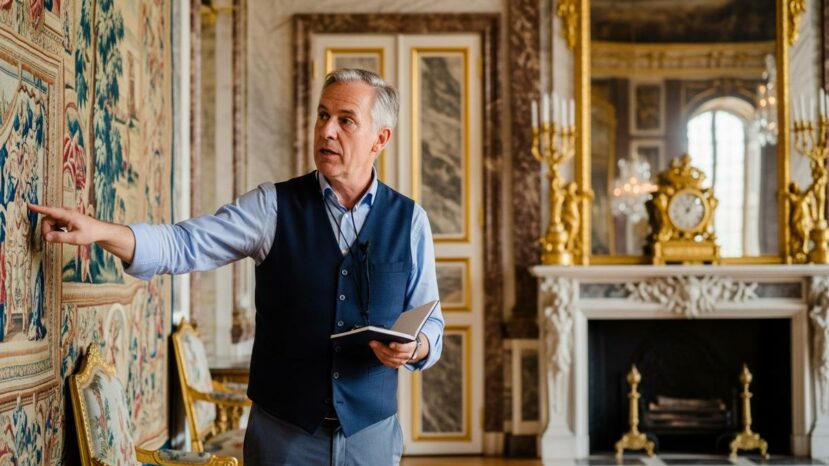


At the Château de Versailles, a “visit like no other” breathes new life into the exhibition devoted to the Grand Dauphin. It features objects, voices and glimpses, to shed light on a prince who was reputedly discreet, yet central tohistory.
A guided experience at the Château de Versailles
Conceived as a living narrative, the tour accompanies the visitor step by step. It links works, gestures and sources to make sense.
The mediation is based on excerpts from correspondence and a workshop focus. In addition, a sensitive device highlights details that are often invisible in the halls of the Château de Versailles.
Groups are kept small to ensure that they can listen at their own pace. Consequently, limited seating and advance reservations are generally required.
“This visit re-enchants the exhibition and changes the way we look at the Bottlenose dolphin.”
What awaits you in the halls of the Château de Versailles
The tour follows a clear progression: first the historical landmarks, then the key works, and finally the contemporary echoes. The narrative is adapted to the audience, without jargon.
Each stop offers a specific reading key. On the other hand, nothing is set in stone: depending on the time slot, the guide modulates the highlights.
- Book in advance to avoid queuing
- Arrive early for security checks
- Check language and level of visit
- Plan a calm pace and short breaks
- Find out about photography conditions
Practical information, tickets and accessibility
The visit is part of the museum’s program, and its schedule is constantly changing. Schedules and frequencies vary from period to period. So it’s best to check availability when planning your visit.
Faton – Le Grand Dauphin (1661-1711) Fils de roi, père de roi et jamais roi is the reference exhibition catalog, in “Paperback with Rabat”, priced at €54.00. It extends the visit with historians’ insights, notes and a rich iconography.
In terms of accessibility, reception staff can provide guidance as required. What’s more, the team adjusts groupings to ensure a smoother flow of visitors to the Château de Versailles.
Who was the Grand Dauphin?
Louis de France, known as the Grand Dauphin, lived from 1661-1711. Son of Louis XIV, he was “son of a king, father of a king, and never a king”, which makes for a complex story. The exhibition places his life between diplomacy, patronage and inheritance.
The Faton catalog puts his posterity into perspective, from the court to the decorative arts. It also sheds light on the scenographic choices that structure the tour of the Château de Versailles.
Why this visit matters today
This format challenges our museum habits. In short, it invites us to slow down, to look, and then to connect the object with the human. As a result, the figure of the Bottlenose Dolphin gains in clarity and nuance.
This same Faton book helps to fix the reference points seen in the classroom. Readers can continue their reflection at home, thanks to an accessible, well-documented summary.
For many visitors, this proposal offers a more sensitive way of experiencing history. It also anchors heritage in the present, without posturing or forced nostalgia. Finally, it reminds us that the Château de Versailles remains a laboratory of ideas for telling the story of the past.