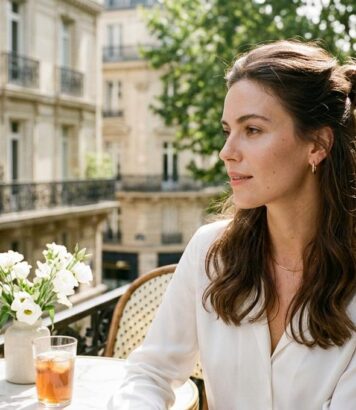
This colorist reveals what you really need to look at before choosing your hair color.
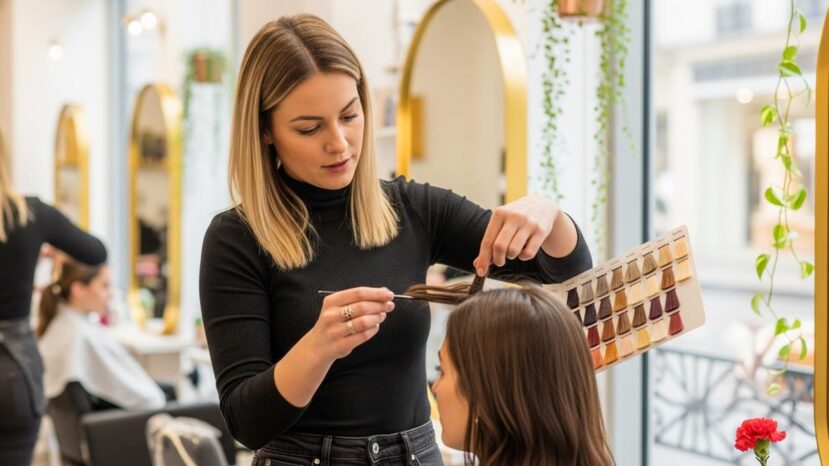


Choosing the right hair color can transform a face in a matter of moments. Today’s beauty codes are evolving, focusing on subtle harmony between hair and skin tone. This approach offers a luminous, natural, second-skin effect.
Why matching your hair color to your complexion is so appealing
For a long time, sharp contrasts were thought to enhance features. Blonde balayage illuminated the tan in summer, while deep brown warmed the complexion in winter. But this vision has changed.
The current trend is to match your hair color as closely as possible to your skin. This creates a subtle, blended look. The result looks more sophisticated than a strong contrast.
This beauty theory works on all skin tones. From the fairest to the darkest skins, everyone can adopt it. What’s more, the method is easy to apply.
“The aim is to harmonize your color with your features, but not necessarily with your complexion, as some people need a marked contrast between their skin and their hair to look their best.”
A natural look that softens features
By choosing a color that matches your complexion, your features appear softer. The face gains natural radiance. The result is a flattering, effortless look.
What makes this trend so successful is its adaptability. There are no universal rules here. Each person can find the shade that suits them best.
- Luminous second-skin effect
- Softened features and a brighter face
- Natural, sophisticated look
- Suitable for all skin tones
- Customized approach for every body type
The importance of skin undertones for successful coloring
Before taking the plunge, it’s important to take skin undertones into account. The tone visible on the surface differs from the underlying hue. This nuance has a direct influence on the final look.
Undernotes act as an invisible base. They determine whether a color will flatter the face or dull it. It’s just like choosing the right shade of foundation.
To avoid faux pas, it’s essential to know your underlying shade. Colors that harmonize with it guarantee a uniform complexion. The result looks luminous and flattering.
How to identify your subtones
The difference between skin tone and undertone is subtle but crucial. Skin tone represents the color visible on the surface. Undertone, on the other hand, is the natural hue hidden beneath the skin.
Coloring that is poorly adapted to the undertones can dull the face. It creates an unpleasant visual imbalance. So it’s a good idea to take the time to analyze your skin tone before making any changes.
A trend to suit every profile
This approach doesn’t offer a one-size-fits-all solution. Some people need a strong contrast between skin and hair. Others, on the contrary, gain radiance with a soft harmony.
Colors that harmonize with the underlying shade and natural hair color give the best results. The complexion appears luminous and even. This personalization makes all the difference.
Choosing hair color is no longer just a matter of following fashion. It’s about understanding your own skin tone and needs. This method offers a natural, made-to-measure result.
In 2026, this trend popularized on social networks continues to seduce. It proves that a thoughtful approach to hair color transforms the face. The right harmony gives an instant healthy glow.