
Knee pain while hiking: these poles reduce impact by 25%, according to an expert


A sharp pain in the knee halfway along a mountain trail often means one thing: turning back. It’s a scenario countless hikers experience every summer, as outdoor walks reach peak popularity across France and beyond. Yet experts have concrete advice for protecting your joints and making the most of every outing.
Why do knees take such a beating on hikes?
Every step places enormous strain on the knees. According to physiotherapist, osteopath and sports coach Alexandre Auffret, the knees must absorb between three and four times your body weight with each stride. Add the weight of a backpack and accumulated fatigue, and the combination quickly becomes painful.
For Auffret, the main cause of this pain is a lack of physical preparation. The body simply isn’t conditioned to handle that kind of stress. Which means everything is decided long before you lace up your hiking boots.
Getting your body ready well before you hit the trail
Joran, creator of the YouTube channel “Montagne en Trek” and seasoned hiker, stresses the importance of regular muscle maintenance. Strong muscles protect the joints, and that starts with a less sedentary daily lifestyle. He recommends planning progressive training outings, beginning on flat terrain with a loaded pack.
The muscle groups to prioritise are the quadriceps, hamstrings and glutes. These muscles play a direct role in stabilising the knee during exertion. Building them up regularly helps reduce the pressure placed on the joint during hikes.
Physiotherapist Mary Kimbrough adds a step that is often overlooked: warming up before you set off and stretching when you return. Both rituals improve blood flow to the knees and either prime the muscles for effort or help them recover afterwards.
The right techniques to protect your knees on the descent
The descent is the most punishing moment for your joints on any hike. Alexandre Auffret advises varying your pace regularly and leaning forward in the direction of the slope. Leaning too far back increases the load on the knee and causes unnecessary tension.
He also recommends keeping the knees supple and slightly bent throughout the movement, and building in regular breaks to stretch and recover. These micro-pauses make a real difference over the course of a long outing.
Practical gear and simple rules to lighten the load
Two practical levers can significantly reduce the pressure on your knees while hiking.
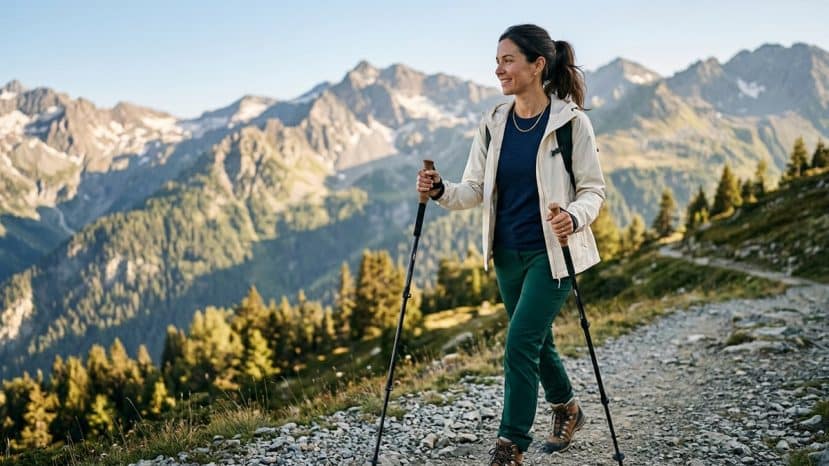
- Walking poles reduce the impact on your knees by 25%, according to Joran, by transferring some of the load to the upper body.
- They also help maintain balance on the descent, limiting sudden movements and reducing the risk of falls.
- Proper pole adjustment is essential to get the full benefit.
- Pack weight should not exceed 15% of your body weight: someone weighing 60 kg should carry a maximum of 9 kg, and someone weighing 70 kg, no more than 10.5 kg.
- A lighter pack means directly less load for your knees to absorb with every step.
Poles work because they allow the arms to contribute to the propulsion effort. The legs, less taxed, stay effective for longer and protect the joints better over time. Joran points out that this piece of kit is often underestimated by beginner hikers, even though it genuinely transforms the experience on the ground.
By applying these principles, from muscle strengthening and pack lightening to mastering the descent, knee pain becomes far less inevitable on your next outing in nature.