This Belgian seaside resort with no tower blocks hides Belle Époque villas and wild dunes
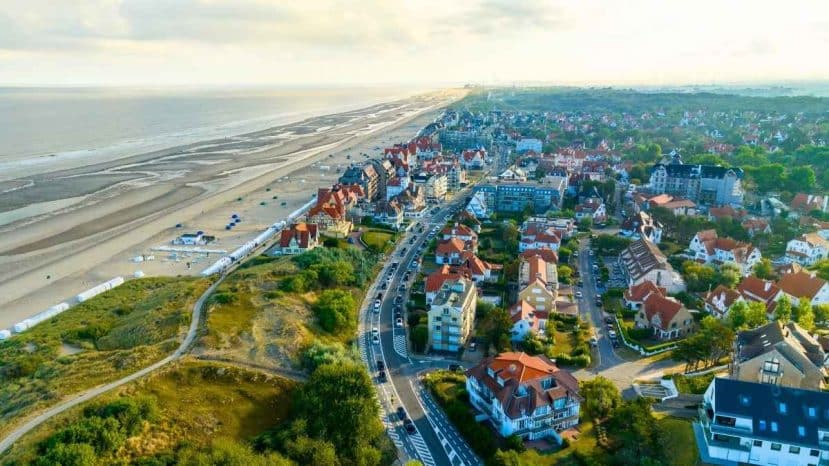


Picture a Belgian seaside resort where no tower block cuts across the horizon, where winding avenues reveal century-old villas tucked between the trees. De Haan, also known as Le Coq sur Mer, offers exactly this rare setting on the Flemish coast, and its charm is well worth lingering over.
An architectural heritage that sets this seaside resort apart
What strikes you immediately in De Haan is the complete absence of high-rises and large residential blocks. The municipality has strictly banned tall buildings across its entire territory. That decision, upheld consistently over the decades, has preserved an urban fabric of rare coherence along the Belgian coast.
Wandering through the concession quarter, laid out in the late 19th century, you discover Belle Époque cottages and villas with beautifully crafted details. Ornate rooflines, timber turrets and decorative verandas lend the whole neighbourhood an aristocratic air. Each house tells the story of an era when people built to last and to delight.
Among these exceptional residences is the villa where Albert Einstein stayed for several months in the early 1930s. That historical footnote adds an unexpected dimension to any stroll: you are walking through a neighbourhood that once welcomed one of the greatest minds of the 20th century, in a setting that has remained almost untouched ever since.
The central square and the old coastal tram station
The central square is a natural stopping point on any visit. Here you can take in the old coastal tram station, a living relic of the era when holidaymakers arrived by the family-load to breathe in the sea air. The surrounding terraces invite you to sit down and soak up the resort’s unhurried pace.
The century-old trees lining the avenues deepen that sense of disconnection. And that is precisely what De Haan offers in 2026: a timeless escape, a stone’s throw from the French border, far from the bustle of the larger resorts along the Flemish coast.
Dunes, pine forest and direct access to the North Sea
Beyond the built environment, nature plays a central role in this seaside town’s identity. The vast dune system bordering the municipality is threaded with paths that lead straight down to the beach. At low tide, long stretches of fine sand extend as far as the eye can see, with nothing on the horizon but the North Sea.
The Duinbossen park, a pine forest integrated into the municipal territory, completes the natural picture. You can hike or cycle through it, enjoying a canopy of greenery that contrasts sharply with the open expanse of the dunes. These two landscapes, dune and forest, complement each other perfectly and multiply the possibilities for a day out.
- Concession quarter laid out in the late 19th century, with winding avenues
- Tall buildings banned across the entire municipal territory
- Historic villa where Albert Einstein stayed in the early 1930s
- Old coastal tram station to admire on the central square
- Duinbossen park, ideal for walking and cycling
- Direct beach access via paths through the dunes
What to eat and feel in this unspoilt seaside resort
After a morning walking between dunes and pine groves, De Haan’s terraces welcome visitors with quintessential Flemish warmth. The local speciality not to be missed is the grey shrimp croquette, an iconic dish of the Belgian coast that you can savour here in a pleasantly leafy setting.
This historic resort brings together several genuine assets for the visitor: a preserved townscape, an architectural heritage that is easy to read and explore on foot, generous nature and a cuisine rooted in maritime tradition. For lovers of Belle Époque architecture or bracing coastal walks, this Belgian seaside resort is a coherent destination that is as restful as it is rewarding.