Crimped hair, the iconic 2000s hair trend, is making a comeback this autumn
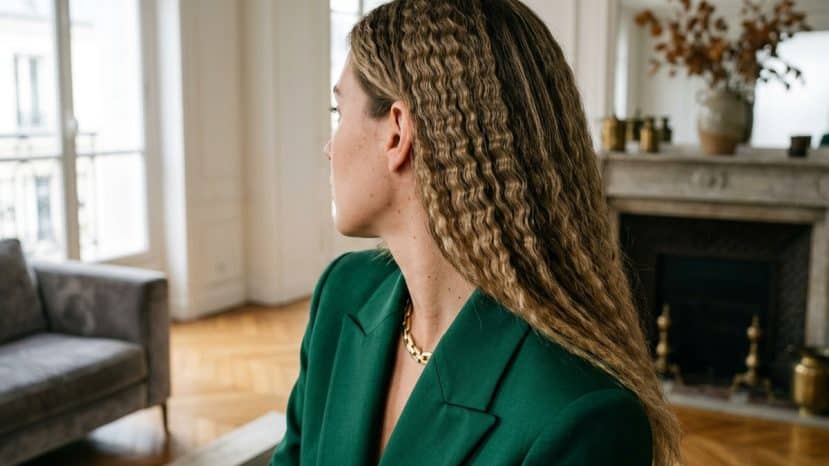


What if the hairstyle you thought you’d packed away for good was about to make its way back into your beauty routine? Crimped hair, the defining 2000s hair trend, is resurfacing this autumn in a reworked, softer and more contemporary form. This comeback is no coincidence: it has been spotted on the runways of two major Fashion Weeks.
From New York to Paris: confirmation of a notable return
To understand why this 2000s hair trend deserves a second look, you need to turn to the runway shows. The New York and Paris Fashion Weeks, for the autumn-winter 2026-2027 collections, both put crimped hair front and centre. This is no isolated flash in the pan: the presence of this texture on two such influential stages confirms it is firmly establishing itself as a key hair inspiration for the season.
In New York, crimped waves were among the standout hair trends spotted for autumn-winter 2026. They were presented as an alternative to mermaid-style waves, with a more defined, graphic finish. Paris, meanwhile, also welcomed subtly crimped hair onto its runways, notably at Chloé, Iris Van Herpen and Zimmermann.
This dual signal, coming from two fashion capitals, lends real weight to the resurgence. For anyone who loves a high-impact hairstyle, this is clearly a direction worth exploring this autumn.
What’s actually different from the 2000s version
It’s hard to talk about this 2000s hair trend without picturing the tight little zigzags we all wore twenty years ago. Yet the crimped look of 2026 is not quite the same thing. The goal is no longer to cover every strand in a uniform, heavily textured pattern.
Today, the idea is to add texture and movement, with fine, regular waves that create volume without overhauling the entire hairstyle. The result stays supple and natural. We’re a long way from those slightly stiff school-disco photos: the current version is all about hair in motion, with a more considered finish.
This shift towards lightness is precisely what makes the style accessible to a wider audience. Because adopting a revisited 2000s hair trend also means choosing a look that adapts to different hair types and lengths.
How to recreate this look at home, with or without heat
Good news: you don’t need to dig out the original crimping iron to get this look. Two approaches are possible, depending on your habits and preferences.
- Work only the lengths or a few sections with a crimping iron, rather than the whole head of hair.
- Aim for a supple, natural result rather than anything too stiff.
- On slightly damp hair, braid several sections and leave them in for a few hours or overnight.
- Once the braids are undone, separate the hair with your fingers to preserve the waves without setting them rigid.
This heat-free method is particularly appealing for those who want to protect their hair. By braiding damp hair, you get a naturally crimped texture that’s easy to adjust depending on the effect you’re after.
By choosing to crimp only certain sections rather than all of your hair, you also play on the contrast between smooth and textured areas. It’s precisely this balance that sets this 2000s hair trend apart from its original incarnation: less uniformity, more freedom in how you apply it.
A texture that brings movement back to hair
Part of what makes this crimped revival so appealing is what it represents as a mindset. After years spent straightening, disciplining and taming hair, this style proposes the opposite: letting texture speak for itself. It’s a way of restoring volume and character to hair that has long been smoothed into submission.
For those still on the fence, the current version of this 2000s hair trend has the advantage of being gradual. You can start with a few sections, test the effect on the lengths, and adjust from there. No radical commitment is needed to make this autumnal look your own.
Because at its core, that is the real strength of this hairstyle returned from the 2000s: it offers a genuine alternative to classic waves, with a more graphic finish and a texture that works just as well with heat as with simple braids. A comeback that, this time around, seems to have found exactly the right measure.