This one simple styling trick spotted at Dior changes your face shape without scissors
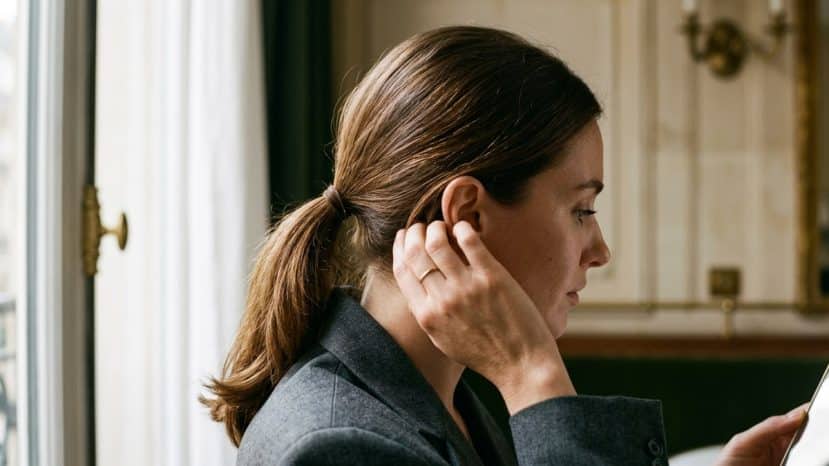


What if the most effective hair change for your face shape this season cost absolutely nothing and took just a few seconds, no salon appointment required? That’s exactly what the autumn-winter runways put in the spotlight, with a gesture as simple as it is reversible, spotted at Dior, Isabel Marant, Victoria Beckham, Gucci and Saint Laurent.
A free styling trick that changes your face shape
Every autumn brings the same urge for a hair transformation, followed by the same hesitation: the fringe or the bob you’ll regret for six months while it grows back. Yet the real news of the season involves neither scissors nor a salon till. It comes down to a single styling move you can try tomorrow morning in front of your mirror, on whatever length you already have.
That move is the side parting. Free, reversible in three seconds, it requires no special tools and works on every length. In terms of effort-to-result ratio, very few hair gestures come close.
What the runways validated this season
The beauty press picked up on a strong signal from the shows: the side parting established itself as the defining styling move of autumn-winter. Three variations sum up the trend. At Victoria Beckham, it anchors a low, sleek ponytail. At Saint Laurent, it accompanies an ultra-sleek chignon. At Gucci, by contrast, it lets hair fall loose and natural.
This comeback is driven by a desire for glamour that feels more alive and less rigid. Far from the razor-sharp partings of the 2000s, the 2026 side parting allows itself a little softness, making it far more accessible and less formal than it has been for years.
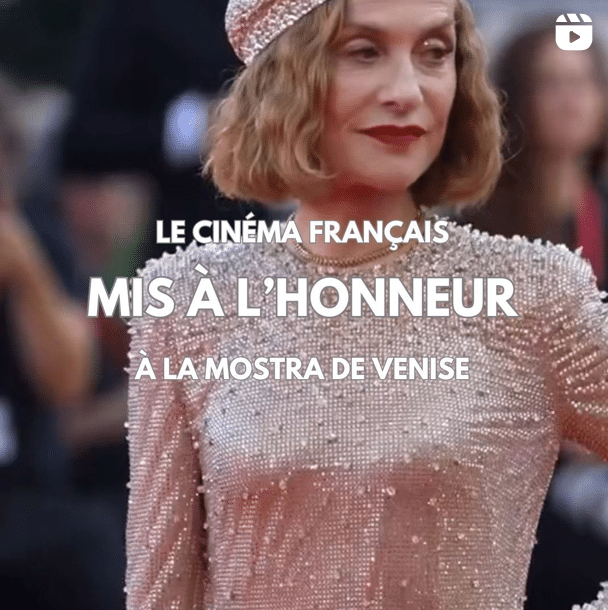
On red carpets, this hair change for the face has already won over plenty of high-profile names. Marion Cotillard and Demi Moore wore it at Cannes, Kate Hudson at the Oscars, Pamela Anderson at the Golden Globes, and figures such as Zendaya and Bella Hadid have also embraced it.
How to adapt the parting to your face shape
This is where the move truly becomes a hair change for your face shape, in the most literal sense. The placement of the parting is adjusted to suit your own features. On a round face, a very off-centre parting creates an illusion of length. On an angular face, a slightly off-centre parting is enough to soften features without hardening the gaze.
Hairstylist David von Cannon, speaking to Vogue UK, also clarifies the effect on volume: parting your hair against its natural growth direction adds volume, while following your natural growth direction gives a softer, more laid-flat result. Two options, two distinct outcomes, from the same styling move that changes your face shape depending on the effect you’re after.
The step-by-step guide
- Work on damp hair, before blow-drying.
- Use the pointed end of a tail comb to draw the parting.
- For more volume, part your hair against your natural growth direction.
- For a softer, more laid-flat result, follow your natural growth direction.
- Adjust the placement to suit your face shape: very off-centre for a round face, slightly off-centre for an angular face.
David von Cannon also notes that a side parting instantly gives a hairstyle a more polished, styled look. It creates an asymmetry that is naturally more dynamic to the eye, adds volume on the fuller side, and signals an intentional choice, even when the result looks effortless.
A trend that spans the ages
Long dismissed as dated, the side parting has in fact crossed every era, from the 1920s right through to Generation Z today. This is no passing fad, then, but a classic that regularly returns to the fore. In 2026, this hair change for the face once again stands out as the most accessible transformation of the season: no budget, no appointment, no months of awkward regrowth to manage.