This protein makes up 95% of your hair and never regenerates: what hairdressers really recommend
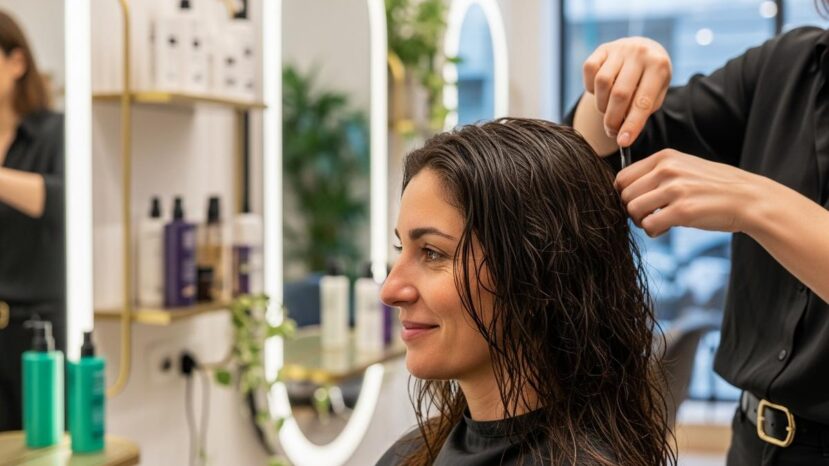


Keratin makes up between 85% and 95% of hair fiber. Yet this fibrous protein is eroded daily by chemical and thermal aggression. It cannot regenerate itself, which explains the growing interest in targeted hair care in 2026.
Understanding the role of keratin in hair
This natural protein is produced by the human body to form dander: hair and nails. Its structure is based on 18 amino acids, including cysteine, organized in two intertwined helical chains. Two types of linkage ensure the solidity of the whole.
Hydrogen bridges, which are lighter, confer flexibility and elasticity. Strong disulfide bridges define the deep strength and architecture of the hair. By way of comparison, a strand of 100 hairs can support up to 10 kg thanks to this structure.
The hair shaft is composed of three concentric layers. The cuticle, an outer layer of scales, is the hair’s first line of defence against damage. The cortex represents 80% to 90% of the hair‘s total weight. Finally, the medulla occupies the heart of the shaft.
“These treatments are an essential rebuilding step, especially after repeated chemical treatments.” – Stéphane Weyl, Training Manager at Fabio Salsa
Why does this protein run out?
Unlike collagen, keratin is not naturally renewed. Hair therefore gradually loses keratin, resulting in a lack of shine and visible softening. Certain practices accelerate this phenomenon.
Powerful straightening and perming break down disulfide bridges. Similarly, oxidative bleaching and coloring deplete capillary protein reserves. The repeated heat of irons and hair dryers also weakens scales.
- Dull, limp or elastic hair: a clear sign of protein deficiency
- Persistent split ends despite good moisturizing
- Weakened fiber after summer or prolonged UV exposure
- Hair damaged by repeated coloring
- Hard-to-tangle curly or frizzy hair
What hair types benefit from keratin treatment?
The hair profiles that benefit most from these treatments are varied. Damaged, dry, brittle and split hair respond well to this protein. Colored or bleached hair also finds real support.
Curly, frizzy or frothy hair benefits from the smoothing effect and easy detangling. Fine hair is not excluded either. They can benefit from a lightweight formulation without the risk of weighing down the fiber.
An intensive treatment is advisable after a summer season or a series of colorings. Even natural, chemically untreated hair can show signs of deficiency. Regular attention will help preserve its vitality.
How to recognize a protein deficiency?
Hair that stretches too much without breaking often lacks keratin. What’s more, a straw-like texture or dull appearance persists despite moisturizing masks. These signs point to a protein-rich treatment rather than a simple moisturizer.
Thick hair requires textures richer in nourishing active ingredients. Fine hair, on the other hand, prefers lighter formulas. To avoid saturating the hair fiber, it’s essential to adapt your treatment to your hair type.
How to use a keratin skin care product on a daily basis?
Care products are available in a range of formats to suit every routine. The nourishing mask is still the most popular: leave on for 3 to 5 minutes, then rinse off with cold water to close the scales. This simple step optimizes the penetration of active ingredients.
The shampoo is applied to wet hair with gentle, circular movements. The thermoprotective spray is sprayed on from roots to ends before any heat drying. These simple gestures protect the fiber every day.
For products with a high protein content, a maximum three-week course of treatment is recommended. A classic treatment lasts three months, and should be repeated every year. Ideally, keratin shampoos should alternate with mild shampoos.
Brazilian straighteners use this protein in combination with formalin and extreme heat to break down disulfide bridges. Hair care products, on the other hand, respect the deep structure of the hair. With a Steampod steam straightener, the effects can last up to six weeks after a professional salon treatment.