This Slovenian valley is Europe’s quietest destination, according to a new study
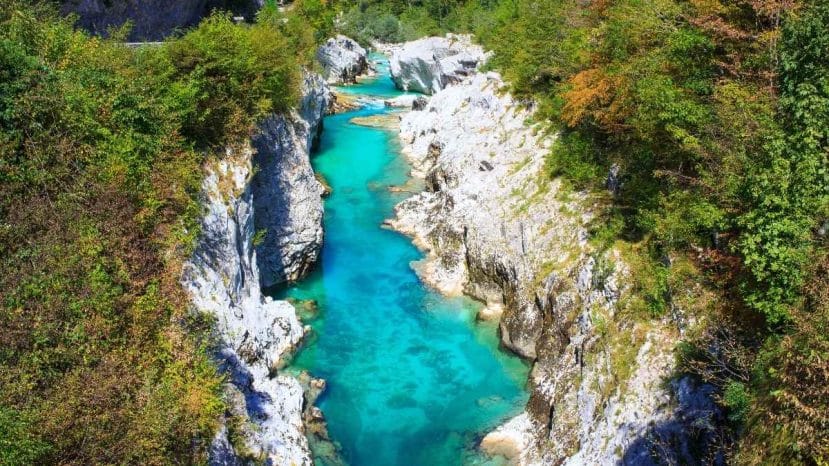


Picture a river shimmering with emerald-blue reflections, dense forests, waterfalls and alpine peaks, all wrapped in near-total silence. The Soča Valley, in western Slovenia, has been named Europe’s quietest destination in 2026, according to a study by Destination.com. And yet this exceptional corner of the continent remains largely unknown to the wider travelling public.
A ranking built on concrete criteria
To identify the most serene spots on the continent, Destination.com developed a Tranquillity Index. The tool draws on several measurable indicators: actual tourist footfall, online search volumes and the popularity of locations across social media. The Soča Valley ranks at the very top of this index, which means in practice that visitors will encounter none of the crowds that overwhelm Europe’s most popular destinations.
The result is all the more meaningful given the overtourism crisis affecting so many parts of the continent. Stunning sites are suffering from excessive visitor numbers that erode the experience for everyone. The Soča Valley, by contrast, has so far escaped this fate, even though its natural beauty is every bit as remarkable as that of its more famous counterparts.
A natural heritage recognised by UNESCO
The valley stretches through the heart of the Julian Alps and shelters landscapes whose value has been officially recognised by UNESCO. Among its most outstanding features are the primeval beech forests of the Carpathians and other regions of Europe, inscribed on the World Heritage List. This international designation underscores the richness and integrity of a natural environment that has remained largely unspoilt.
The Soča river itself is one of the region’s greatest draws. Its exceptional clarity and signature emerald-blue hue make it a genuinely rare sight. Around it, forests, mountain peaks and waterfalls, including the Virje waterfall, complete an alpine landscape of striking coherence. By comparison, Slovenia’s most visited sites, such as Lake Bled or the capital Ljubljana, attract far greater tourist numbers.
What the valley actually offers travellers
Far from being a mere postcard backdrop, the Soča Valley offers a wide range of outdoor activities suited to different types of traveller. Triglav National Park, which runs through the region, opens up hiking trails leading to gorges, waterfalls and sweeping alpine panoramas. The river itself is ideal for rafting, kayaking, canyoning or simply swimming in its crystal-clear waters.
- Hiking in Triglav National Park with views over gorges and waterfalls
- Rafting, kayaking and canyoning on the Soča river
- Swimming in remarkably clear waters
- Walking the Alpe-Adria Trail, a long-distance cross-border route
- Exploring the villages of Bovec, Kobarid and Tolmin
- Discovering the remnants of the First World War
History and culture enthusiasts will also find plenty to explore. The region bears the traces of the First World War, whose remnants form a singular historical heritage. The famous Alpe-Adria Trail also passes through the valley, offering another way to experience these landscapes entirely at your own pace.
Europe’s quietest destination: a genuine alternative to mass tourism
What sets the Soča Valley apart from other alpine destinations is precisely this rare combination: UNESCO-recognised natural splendour, a diverse range of activities and visitor numbers that remain refreshingly modest. For travellers looking to escape the bustle of Europe’s major cities, this Slovenian valley represents a concrete and accessible alternative.
The villages of Bovec, Kobarid and Tolmin serve as base camps for organising a stay in the region. Each offers direct access to the valley’s natural and historical riches. Europe’s quietest destination is therefore not some remote, hard-to-reach outpost, but a well-structured territory fully capable of welcoming visitors while preserving its peaceful atmosphere.
In an increasingly saturated European tourism landscape, the Soča Valley embodies what many travellers are searching for without always knowing where to find it: untouched nature, genuine quiet and activities rooted in the land. This destination deserves to be discovered, before the crowds eventually do.