
Voted the world’s most beautiful hike ahead of Croatia and Switzerland, this gem is in France
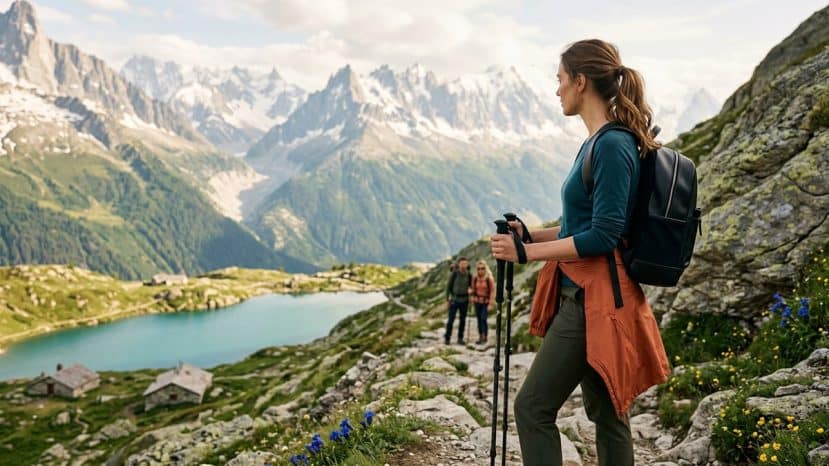


Picture a trail winding along limestone cliffs that plunge into deep blue water, with nothing but the Mediterranean stretching out to the horizon. That is exactly what the Calanques massif near Marseille has to offer, and it has now been recognised as the most beautiful hike in France and the world, according to a ranking published by Sportshoes.com.
A score of 94 out of 100: how the Calanques claimed the top spot worldwide
The Sportshoes.com ranking is not based on a simple vote or online popularity. The methodology used is eye-tracking, a technique that analyses how the gaze moves across landscapes. In practice, this approach measures the visual attention a natural environment commands, making it a particularly revealing indicator of a location’s aesthetic impact.
With a score of 94 out of 100, the Calanques massif edges out two internationally acclaimed destinations: the Plitvice Lakes in Croatia and the Lauterbrunnen Valley in Switzerland. This result puts hiking in France at the very top of a global ranking, ahead of sites that draw millions of visitors every year.
For the walkers and Marseille locals who frequent these trails, the ranking simply confirms what they have always known. The white cliffs, turquoise coves, Mediterranean pines and sweeping sea views make up a setting that very few massifs can match.
Routes for every level, from first-timers to seasoned hikers
One of the massif’s greatest strengths is the sheer variety of its trails. The area stretches along the Marseille coastline all the way to Cassis, offering a wide range of itineraries suited to very different profiles. Whether you are a complete beginner or an experienced walker, there is a route to match your level.
For a first taste of hiking in France within this massif, the route between Luminy and the Sugiton viewpoint is probably the best starting point. This 2.3-kilometre trail takes between 30 and 40 minutes to complete. At the top, the viewpoint reveals a remarkable panorama over Sugiton, the Puget massif, the Grande Candelle and the Calanque de Morgiou. It is an ideal option for discovering the essence of the massif without overexerting yourself.
More seasoned hikers, on the other hand, can take on the full traverse via the GR 98-51. This route of around 35 kilometres links Marseille to Cassis over nearly three days. It demands solid physical preparation and careful logistics, but rewards walkers with total immersion in the massif’s diverse landscapes.
What the trails have in store kilometre by kilometre
Beyond the numbers, it is the massif’s visual richness that underpins its reputation. Rugged limestone ridges alternate with wooded stretches, creating a constantly shifting backdrop that keeps walkers engaged throughout. Some calanques feature sheer rock faces dropping straight into deep blue water, a spectacle that is hard to find anywhere else on a hike in France.
Panoramic views over the Mediterranean, accessible from several points across the massif, add yet another dimension to the experience. Every kilometre walked brings its own visual discoveries, whether that is a viewpoint, a hidden cove or a narrow passage between two cliff faces.
Planning your visit to the Calanques: the essentials you cannot afford to overlook
The beauty of the massif should not distract from its very real constraints, particularly in summer. The heat can be intense, and water sources are absent along much of the trails. Here are the essentials to prepare before you set off:
- Enough water to stay hydrated throughout the route, especially during periods of extreme heat
- Footwear suited to walking on steep limestone terrain
- A hat and sunscreen to protect yourself from the Mediterranean sun
- A map or a hiking app that works offline, as mobile coverage can be limited
- An early morning start, while temperatures are still manageable
It is also essential to check access conditions before you go. During periods of high fire risk, certain trails may be temporarily closed. Visitors must also stay strictly on marked paths and respect the wildlife, plant life and rules of the national park. These precautions not only keep walkers safe, but also help preserve an exceptional site for future generations.