These mythic Parisian brasseries have been feeding the city for over a century
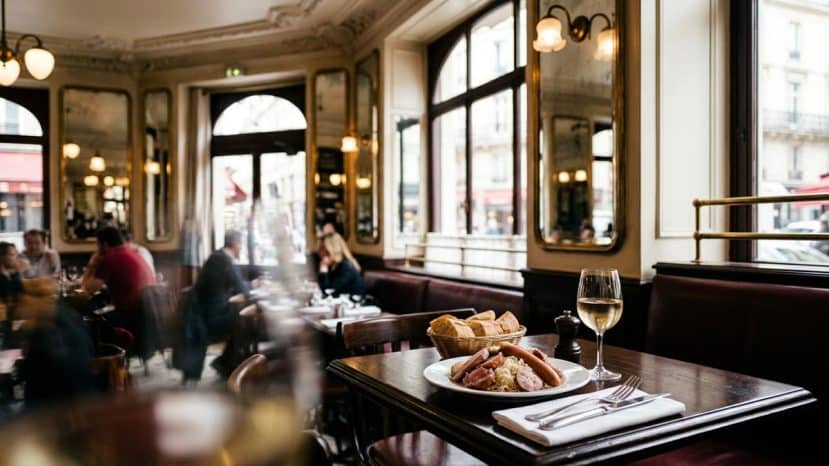


Picture a dining room with century-old wood panelling, a plate of seafood set before you and the warm hum of a packed house: that is exactly what the best Parisian brasseries promise. From the Bastille to the Champs-Élysées, these legendary addresses tell the story of French gastronomy through their décor, their recipes and their traditions.
Institutions that have stood the test of centuries
Some Parisian brasseries were already open when the Eiffel Tower was built. Le Grand Café Capucines, which opened in 1875, was inaugurated at the same time as the Opéra Garnier. To this day it welcomes guests every day from 7am to 1am, with a menu that revisits the classics, from melt-in-the-mouth snails to profiteroles. A recent renovation has managed to preserve its Belle Époque atmosphere entirely.
Brasserie Bofinger, founded in 1864 by Alsatian innkeeper Frédéric Bofinger, lays claim to the title of oldest Alsatian brasserie in Paris. Tucked between the place de la Bastille and the place des Vosges, it has navigated more than 150 years of history without ever compromising its soul or the authenticity of its cooking. Meanwhile, La Renommée, housed in a former grocery shop founded in 1823 in the 1st arrondissement, offers a generous French menu backed by a cellar boasting 700 references.
Brasserie Floderer opened its doors in 1909 in the cour des Petites-Écuries. Its intact Belle Époque décor and strongly Alsatian-influenced cuisine have made it a benchmark address, open from breakfast through to the weekend brunch.
The essential Parisian brasseries you need to know
- Au Pied de Cochon: founded in 1947, open almost 24/7, with a pig’s trotter recipe unchanged for nearly 70 years.
- Brasserie Mollard: a listed Art Nouveau interior near Gare Saint-Lazare, serving until after midnight.
- Brasserie Sébillon: founded in 1914, famous for its Allaiton d’Aveyron free-range leg of lamb served unlimited, open 7 days a week until 11pm.
- Bofinger: the oldest Alsatian brasserie in Paris, founded in 1864, and its legendary choucroute.
- Le Grand Café Capucines: open since 1875, every day from 7am to 1am, perfect for a post-show supper.
An address for every mood, from the Seine to the Champs-Élysées
For an out-of-the-ordinary experience among Parisian brasseries, the péniche Aqua offers a large sun-drenched terrace moored on the Seine at Suresnes. It is an ideal spot for lunch or a drink with the current flowing past and a soothing view of the river.
More under the radar, Maison François 1er is a former wine bar reinvented as a quietly elegant brasserie just steps from the Champs-Élysées. Its cosy setting and carefully crafted French cuisine make it a confidential address well away from the bustle of the main boulevards. Similarly, brasserie Le Tourville, in the 7th arrondissement, dates back to the 1860s. Taken over by a family management team, it has refreshed its Jacques Garcia-designed interior and reworked its menu. Book the right table upstairs and you get a direct view of the Eiffel Tower.
L’Auberge Dab, near the porte Maillot and the Palais des Congrès, stands out for its generous seafood platters prepared to order in a Belle Époque setting. It is a reliable choice for anyone seeking traditional French cooking in a well-appointed room.
What Parisian brasserie lovers can look forward to in 2026
The Parisian brasserie scene continues to evolve. Brasserie Casel will open in autumn 2026 at 16 avenue Victoria, a short walk from the Théâtre du Châtelet. Its concept centres on French cuisine built around aged meats, displayed in a glass-fronted ageing cabinet visible from the dining room. It is already one of the most anticipated openings among French gastronomy enthusiasts.
And that, ultimately, is the strength of these establishments: they do not simply serve food, they uphold a French art de vivre, through preserved interiors, handed-down recipes and generous hospitality. Whether it is unlimited leg of lamb at Sébillon, fish soup at Mollard or a legendary pig’s trotter served after midnight, every address carries a story that the plate tells better than any guidebook.