Chanel posts 16% growth in the first half of 2026, driven by Matthieu Blazy


Queues outside boutiques, pieces selling out within weeks, and 16% growth in comparable terms for the first half of 2026: the house of the double C has just demonstrated that a well-calibrated creative renewal can reignite an entire commercial machine. The figure, reported by Bloomberg on 4 August and picked up by Reuters, comes from a source close to the house’s accounts and has not been officially confirmed, Chanel remains a private company that discloses very little financial information.
The product as the primary driver of desire at Chanel
For much of the past decade, luxury growth rested on a set of well-worn levers: new store openings, geographic expansion, repeated price increases, and a relentless push upmarket. The model worked, until it didn’t. As price tags climbed, consumers began demanding justification. The question was no longer simply “how much does this bag cost?” but “what actually warrants that price today?”
Against that backdrop, the product has returned to centre stage. Brands that manage to create clearly identifiable objects of desire, whether a bag, a jacket, or a silhouette, are recovering an advantage that price hikes alone can no longer guarantee. That is precisely the mechanism the first-half 2026 performance illustrates in concrete terms.
Matthieu Blazy’s first commercial test: a clear pass
The new artistic director presented his debut spring-summer 2026 collection in October 2025, with pieces arriving in stores from early March 2026. From the very first weeks, footfall at points of sale was unusually high. In Paris, the historic boutique at 31 rue Cambon saw a surge of clients seeking out the new pieces. In New York, the scene on 57th Street was striking enough for Vogue to describe a full-blown “Matthieu-mania”, with queues forming outside the store. FashionUnited documented the frenzy as early as March, noting that products sold out rapidly across multiple boutiques.
The phenomenon throws into sharp relief a distinction that luxury strategies often blur: the difference between visibility and desirability. A campaign can raise a house’s profile. A collection can rekindle the urge to buy. That is precisely the transition investors are watching most closely today.
Creatively, Blazy plays with the house’s historic codes, tweed, the camellia, chains, pearls, the tailored suit, approaching them with a more fluid, more contemporary, and often more functional sensibility. The renewal is not radical enough to alienate the loyal clientele, yet it is visible enough to give that clientele a reason to return and a younger audience a reason to look at the house with fresh eyes.
The bag as the economic accelerator of renewal
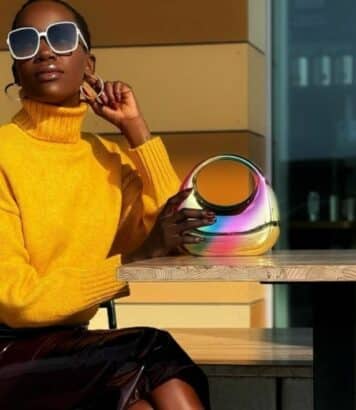
Beyond ready-to-wear, accessories play a far more direct role in converting desirability into sales. Blazy’s first collections have meaningfully refreshed the leather goods offer. Bloomberg highlighted the role of bags in the house’s ability to turn attention into actual purchases, with clients queuing to access the new styles.
The mechanism is straightforward: when a new product becomes immediately desirable, the runway show transforms into a commercial engine. Store traffic rises, appointments multiply, waiting lists appear, and social media amplifies the whole phenomenon. The bag, financially more accessible than a full ready-to-wear look, frequently becomes the first point of entry into a house’s world.
- +16% growth in comparable terms in the first half of 2026, according to Bloomberg and Reuters
- Blazy’s first collection arrived in stores in March 2026, following a show in October 2025
- Queues documented in Paris (rue Cambon) and New York (57th Street)
- Miu Miu: +49% retail sales growth in the first half of 2025, then +35% for the full year 2025
- Burberry is refocusing its assortment on its heritage categories, notably coats and scarves
A signal the industry cannot afford to ignore
Chanel’s performance carries even greater weight when set against its competitors. Reuters notes that LVMH and Hermès posted far more modest gains in their relevant segments, in an environment that remains challenging for luxury overall. That contrast is hard for the rest of the industry to overlook.
Other houses illustrate the same mechanism, each in their own way. Miu Miu recorded a 49% rise in retail sales in the first half of 2025, followed by 35% growth for the full year 2025, with the Prada Group explicitly attributing that performance to the brand’s creativity, its collections, and its cultural resonance. Burberry, for its part, is making a different bet: rationalising its offer around its flagship categories rather than banking on a new creative surge. In both cases, the central question remains the same: what are you actually putting in front of the customer?
That said, some caution is warranted when reading Chanel’s figures. The 16% result is still very recent, with the first collection only reaching stores in March. It is therefore difficult to distinguish a genuine structural shift in demand from the novelty effect surrounding a highly anticipated artistic succession. Furthermore, the house has an atypical profile, its tight control over distribution and the sheer power of its image make any mechanical comparison with other brands a risky exercise.
What the coming quarters will need to confirm is therefore less the existence of the phenomenon, already attested by the early numbers, than its ability to endure.