This Vendée peninsula rivals the Île de Ré without the crowds


Imagine a road that vanishes beneath the waves at high tide and reappears as if by magic a few hours later: that is how you arrive on the Vendée peninsula of Noirmoutier, and that detail alone is enough to understand why it captivates so many. Tucked away in the north of the Vendée, this island with an end-of-the-world feel draws visitors every year in search of space and silence, far from the overcrowded seaside resorts.
The Passage du Gois, a one-of-a-kind entrance to this Vendée peninsula
Before you even set foot on the island, the journey takes on a special quality. Noirmoutier is connected to the mainland by two very different routes: a modern bridge, open at any hour, and the legendary Passage du Gois. This submersible road, unique in the world, can only be crossed at low tide. To drive the Gois is to accept the rhythm of the ocean on its own terms, not yours.
That gentle constraint immediately shifts your pace. As you arrive on the Vendée peninsula, the landscape takes over: vast salt marshes shimmer in the light, blonde dunes stretch out against the wind, and maritime pine forests release their scent into the salt-tinged air. The sense of escape is instant and complete.
An art of living away from the noise
What sets Noirmoutier apart from classic seaside destinations is, above all, a particular kind of freedom. No crowds, no endless queues. The Vendée peninsula offers what few Atlantic islands can still promise: space, simplicity, and the ability to breathe without bumping into someone at every turn.
The architecture adds to this soothing atmosphere. The traditional whitewashed houses, dressed with blue or green shutters, have earned Noirmoutier the nickname of the other white island. This understated, cohesive built environment deepens the feeling of being somewhere preserved, where time moves differently.
Comparisons with the Île de Ré come up often among visitors. Yet the Vendée peninsula plays in a different league: where its rival draws the masses, Noirmoutier bets on tranquillity and the generosity of its landscapes.
Landscapes and places to explore at your own pace
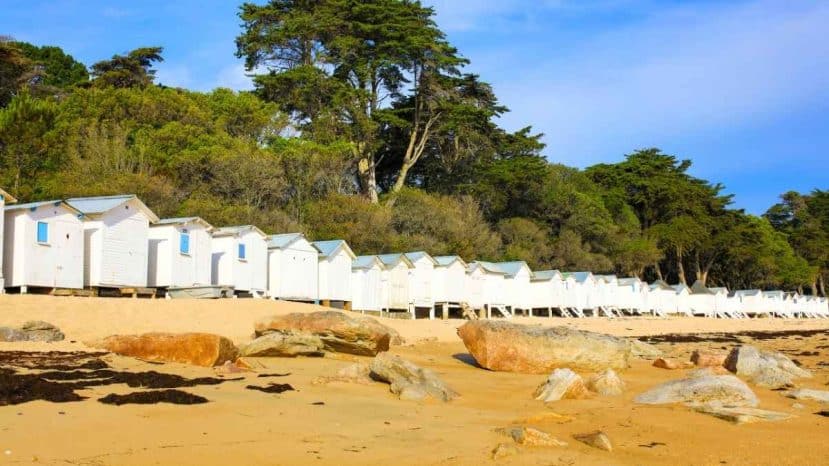
The variety of atmospheres is one of this destination’s greatest strengths. The Bois de la Chaise alone concentrates several centuries of charm: 19th-century villas hide beneath holm oaks and strawberry trees, while below them, the Plage des Dames and its white wooden bathing huts seem frozen in another era.
- The Passage du Gois, a submersible road accessible only at low tide
- The Bois de la Chaise and its 19th-century villas beneath the holm oaks
- The Plage des Dames with its white wooden bathing huts
- The port of l’Herbaudière, brought to life by the returning fishing boats
- The wild beaches of Le Vieil, perfect for quiet contemplation
Further north, the port of l’Herbaudière comes alive with the return of the fishing boats, offering a vivid and authentic glimpse of the local maritime economy. In contrast, the wild beaches of Le Vieil invite quiet contemplation, in a raw setting that the ever-changing Atlantic light transforms from one hour to the next. It was, in fact, this very particular light that once inspired the painter Renoir.
How to reach and explore the Vendée peninsula
Accessibility is one of Noirmoutier’s most underrated assets. From Nantes or La Roche-sur-Yon, the journey is straightforward, making it just as suited to a spontaneous weekend escape as to a long summer holiday. The bridge is free, and the Passage du Gois remains an option for travellers who want an arrival like no other.
Once there, the Vendée peninsula proves ideally suited to slow travel. Miles of safe cycling paths wind between land and sea, making the car almost unnecessary. It is by bike, above all, that you best take in the variety of the landscapes, moving from salt marshes to pine forests, from wild beaches to lively harbours. This Vendée peninsula asks something of you, but it gives itself generously to those who take the time to explore it.