
After 50, hairdressers warn about the daily habit that’s damaging your hair
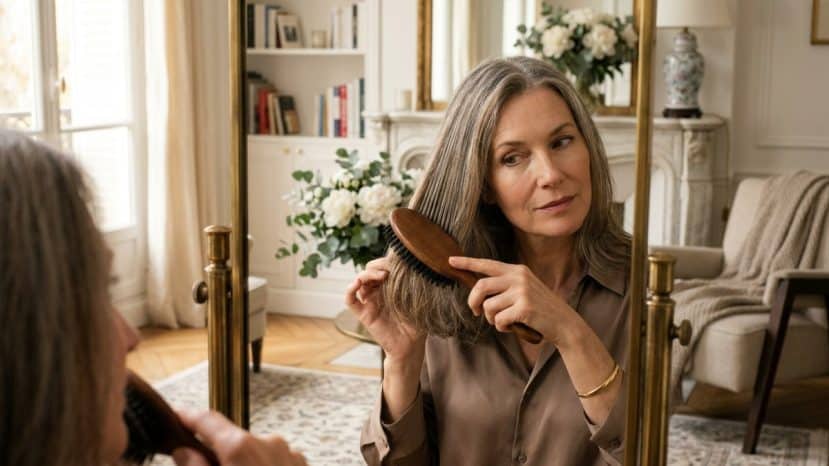


Every morning, the same ritual: you grab the brush, run the hair dryer over it, and repeat until you get a result you can live with. Yet it’s precisely these automatic gestures that hairdressers are flagging as the real cause of damaged hair after 50. Before you swap your shampoo, it’s worth taking a closer look at what your hands are actually doing.
What hairdressers say about how hair changes with age
After 50, the hair fibre no longer behaves the same way. It produces less sebum, making it drier, sometimes finer and more fragile. This isn’t an anomaly, it’s a natural evolution linked to age, hormones, colouring and lifestyle, as hairdresser Edward James explains in Women’s Health magazine.
The problem is that many women carry on using the same methods they relied on at 30. They push harder, start over, force it. And the more force they apply, the more the hair suffers. This gap between expectations and the reality of the hair fibre is often the root cause of the damage seen day to day.
The result: the shampoo gets the blame. A new one is bought, then a mask, then an oil. Yet no product, however high-quality, can compensate for a routine that mistreats hair every single day. Professionals are clear on this point: it’s the technique that needs fixing first.
Brushing and heat: two habits worth rethinking, according to experts
Among the most common mistakes, excessive brushing comes out on top. Constantly running a brush through the hair, smoothing the same sections over and over, blasting the dryer the moment any volume shifts, all of this exhausts the fibre. In trying to tame the hair, you end up making it drier, more brittle and duller.
Brushing technique itself deserves a rethink. Edward James recommends starting at the ends and working gradually up towards the roots. Starting at the roots tightens knots and causes unnecessary breakage. On wet hair, this rule becomes even more important: the fibre is especially vulnerable at that point. A wide-tooth comb or a detangling brush is more than sufficient in that case.
Heat styling tools pose a similar problem. Running a straightener over the same section multiple times, or using maximum heat, leaves lasting damage on the fibre. As Edward James points out, every pass of heat weakens the hair slightly. He advises letting hair air-dry whenever possible. A final rinse with cool water also helps to smooth the fibre naturally: hair looks shinier, and the urge to reach for the straightener becomes less pressing.
The practical steps hairdressers recommend for everyday care
Beyond brushing and heat, how often you wash your hair plays a role that’s frequently underestimated. Washing every day isn’t a good idea, because the sebum produced by the scalp acts as a natural conditioner. Washing too frequently strips the fibre of this protection, leaving it dry, rough and dull. Spacing washes out by a day, where possible, helps hair retain more suppleness and makes it easier to style.
- Space out washes to preserve the scalp’s natural sebum.
- Detangle from ends to roots, never the other way around, to avoid breakage.
- Use a wide-tooth comb on wet hair rather than a regular brush.
- Limit heat passes on the same sections and avoid maximum temperature settings.
- Favour air-drying whenever time allows.
- Finish with a cool-water rinse to smooth the fibre and boost shine.
These adjustments may seem minor, but their cumulative effect on hair health is real. That’s precisely the message hairdressers keep repeating: your daily routine carries far more weight than the products you choose. One corrected habit is often worth more than a last-minute treatment bought in a panic.
Why changing your method matters more than changing your products
The temptation to overhaul your entire bathroom cabinet is understandable. When hair stops responding, you look for a quick fix. Yet hairdressers insist on one point: the biggest mistake is continuing to style your hair the same way you always have, then getting frustrated when the results don’t follow.
The fibre has changed, so the method needs to change too. It’s not about miracle products, it’s about adapting. Less heat, less intensive brushing, fewer washes: these three adjustments, applied consistently, give hair better hold and more radiance. And all without spending a single cent more.