1,500 secret places in Paris open their doors this weekend: our top picks
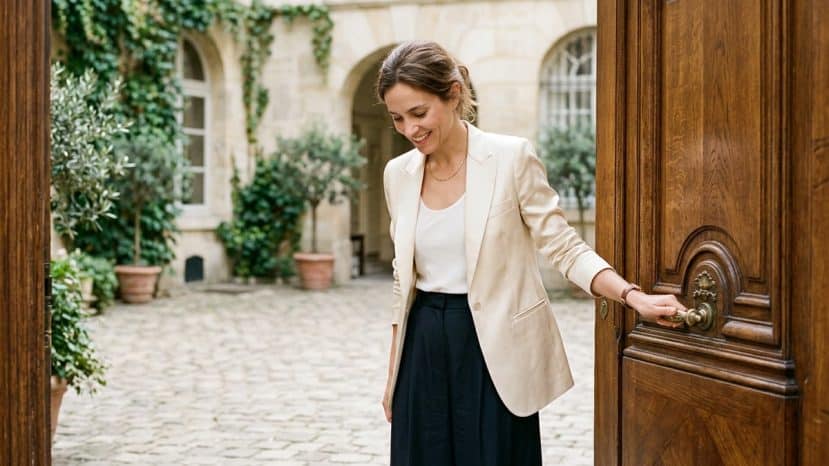


Every year, the Journées du Patrimoine reveals a city we thought we knew inside out. This 2026 edition, scheduled for Saturday 19 and Sunday 20 September, opens up more than 1,500 sites across Paris and Île-de-France, including a wealth of locations normally closed to the public. For anyone in search of the true secret places in Paris, this weekend is a rare chance to push open doors that stay firmly shut for the rest of the year.
Under-the-radar addresses that few Parisians know about
Some Parisian buildings have gone unnoticed for decades, simply because they have never been accessible. This year, several of them are finally lifting the veil. The Grande Loge de France and the Grande Loge Féminine de France open on 19 and 20 September, offering an unprecedented look inside these Freemasonry institutions whose architecture and history remain largely unknown to the general public.
In the same spirit, the Institut Métapsychique International welcomes visitors to explore over a century of research into paranormal phenomena and parapsychology. Nearby, the Maison d’Auguste Comte and the apartment of Georges Clémenceau transport guests into the daily lives of two towering figures of French intellectual and political history.
The Hôtel de Beauvais, built in 1654 for Catherine de Beauvais and converted into the Paris Administrative Court of Appeal in 2003, reveals its trompe-l’œil details and deliberate asymmetries. This kind of building, sitting at the crossroads of architectural and legal history, perfectly illustrates what the Journées du Patrimoine can uncover among the secret places in Paris.
Industrial, scientific and offbeat heritage on the programme
Beyond the grand private mansions, this 43rd edition also shines a light on less expected heritage. The air-raid shelter of Bois-Colombes, a surviving witness to the Second World War, opens its doors exceptionally this weekend. In the same vein, another wartime air-raid shelter in the greater Paris region is also open to visitors.
On the scientific side, the Institut de Paléontologie Humaine, founded by Prince Albert I of Monaco, welcomes the public for the first time in many years. The Observatoire de Paris, Meudon site, offers guided visits by reservation on Saturday 19 September. Both sites are a reminder that the secret places in Paris are by no means limited to gilded drawing rooms.
- The Espace Niemeyer, headquarters of the French Communist Party and designed by Brazilian architect Oscar Niemeyer, opens its doors to lovers of modern architecture.
- The Musée Valentin Haüy, dedicated to the history of blind people, holds an open day on Saturday 19 September.
- The Musée d’Histoire de la Médecine opens free of charge on Saturday, by reservation, at the heart of the former faculty of medicine.
- The art workshops of the Musée du Louvre welcome visitors by registration on 19 and 20 September to discover their traditional craftsmanship.
- The FDJ United studios in Boulogne-Billancourt open to the public for the very first time, to mark the 50th anniversary of the Loto.
Île-de-France: a playground for the curious
The wider region is also brimming with hidden heritage treasures, well beyond the périphérique. In Seine-et-Marne, the Monastère Saint-Joseph de Brou-sur-Chantereine, usually shielded from public view, shares part of its history. In Provins, the Caveau du Saint-Esprit, the last remaining vestige of a medieval hospital, and an active archaeological excavation site are both open to visitors.
In the Yvelines, the Villa Beau-Chêne in Le Vésinet, connected to Joséphine Baker, opens on Saturday 19 September. The Datcha – Musée Ivan Tourgueniev in Bougival, a Swiss-Russian chalet that once belonged to the writer, is one of the confidential addresses not to be missed. Further north, in the Val-d’Oise, the troglodyte church of Haute-Isle, unique in the region, plunges visitors deep into the living rock.
In Essonne, the Nymphée de Viry-Châtillon, a mysterious grotto encrusted with shells, and the crypt of the Couvent des Bénédictines anglaises in Pontoise make for two wonderfully offbeat discoveries. These sites, often unknown even to nearby residents, embody what the Journées du Patrimoine does best: turning an ordinary weekend into an exploration of secret places in Paris and across the entire region.
Fashion, literature and living heritage
This 2026 edition also brings some unexpected openings in the worlds of culture and fashion. Maison Roger Vivier unveils its Parisian hôtel particulier, its archives and its savoir-faire. The École des Arts Joailliers opens the Hôtel de Mercy-Argenteau for its first-ever participation in the Journées du Patrimoine, with activities centred on the art of jewellery-making. The historic headquarters of the L’Oréal group, known as Le Visionnaire – Espace François Dalle, offers free guided visits.
On the literary side, the Maison de Balzac in the 16th arrondissement, the Maison Elsa Triolet-Aragon in the Yvelines and the Maison Jean Monnet in Bazoches-sur-Guyonne all open free of charge. The room of Vincent van Gogh at the Auberge Ravoux in Auvers-sur-Oise, preserved almost intact since 1890, can also be visited this weekend. These literary and artistic addresses round out a selection that makes the secret places in Paris and Île-de-France the true thread running through this edition.
To make sure you don’t miss a thing, the dedicated page for this selection is worth checking regularly, as the programme continues to be revealed ahead of the 19 and 20 September 2026 weekend.