Champagne harvest moves three weeks earlier as climate reshapes the 2026 vintage
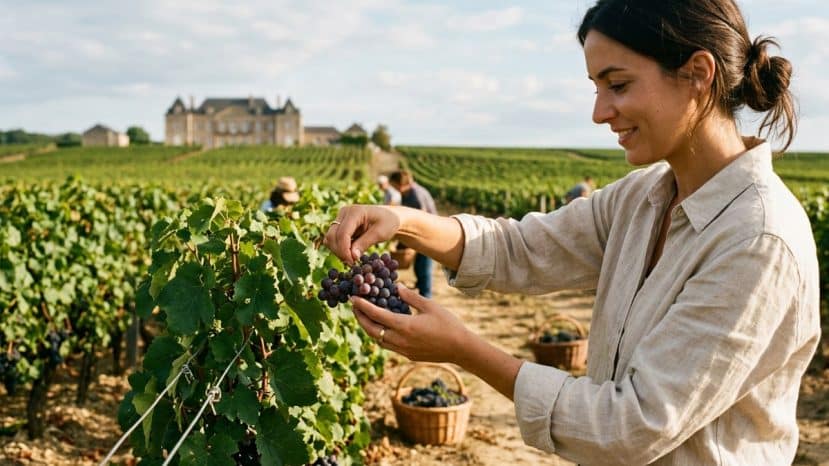


On 6 August, growers in the Aube were already picking their grapes, under special dispensation. The champagne industry had never seen anything like it. In 2026, a brutal heatwave upended everything from harvest schedules to blending decisions, raising questions that go far beyond a single season.
An unprecedented harvest calendar for champagne
The 2026 harvest opening date was officially confirmed by prefectural decree on 12 August, on the recommendation of the Comité Champagne (CIVC) and following an opinion from the Institut national de l’origine et de la qualité (INAO). Depending on the commune and the grape variety, picking continued through to 22 August. These dates represent a radical departure from the historical norm, which typically falls around mid-September.
The immediate cause was an accelerated ripening driven by the summer’s successive heatwaves. The bunches reached full maturity three to four weeks ahead of a standard cycle. For the Houses and growers alike, that meant emergency recruitment of harvest workers, revised schedules and last-minute logistical overhauls. It is a scenario the industry is seeing repeat and intensify year after year.
In the Aube, certain plots were picked as early as 6 August, thanks to specific exemptions. That single figure speaks volumes about the scale of the shift from traditional practice.
Drought, sugar levels and regulation: the concrete challenges of the vintage
The heat did not simply push the calendar forward. It also weakened vines already under strain from several consecutive dry summers. The lack of water took a toll on the overall health of the vineyard, making harvest management even more demanding.
On top of that, the high temperatures produced berries with a higher sugar concentration. The direct consequence: a naturally elevated alcohol level after fermentation. This raises a concrete regulatory question. According to reporting by the newspaper L’Union, the Syndicat général des vignerons has reportedly taken steps to revise the currently permitted threshold for champagne’s alcoholic strength after the second fermentation, set at 13%. This issue touches the very identity of the appellation and is one to watch closely.
- Harvest opening officially set on 12 August 2026 by prefectural decree
- Three to four weeks ahead of the standard ripening cycle
- First pickings from 6 August in the Aube, under special dispensation
- Higher-sugar berries, naturally elevated alcohol level after fermentation
- Steps taken to revise the 13% alcoholic strength threshold
How the great Houses are adapting to a warming climate
Faced with this structural shift, some Houses have already embarked on far-reaching changes. At Louis Roederer, cellar master Jean-Baptiste Lécaillon has indicated he is rethinking the proportion of each grape variety in his cuvées. The House has also launched a genetic conservation programme for its vines, selecting the rootstocks most resilient to heat.
At Ruinart, the logic of adaptation takes a different form. In 2023, the House launched its first new cuvée in over twenty years, named Blanc Singulier, conceived to bear witness to the climatic particularities of a given year. In 2026, Ruinart is presenting the third edition of this cuvée, crafted from wines drawn from the 2020 harvest. That year, a mild winter, an early spring and a summer with temperatures exceeding 40°C had already led to an August harvest.
These initiatives make clear that climate change is now a full participant in shaping each vintage. Blending decisions, grape variety choices and even the regulatory definition of the appellation are all set to evolve. For enthusiasts and professionals alike, understanding these transformations offers a richer way to read what every bottle says about the era it comes from.