
Many people look for an expiry date”: the key symbol on your cosmetics you need to know
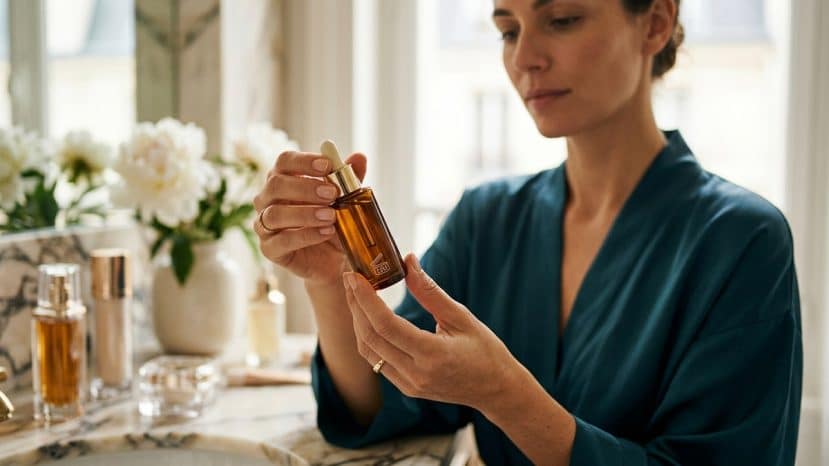


You’ve probably pulled a cream from the back of a cupboard at some point and had no idea whether it was still safe to use. It’s an incredibly common habit, but one that can expose your skin to real risks. Danielle Louise, beauty expert at the platform Fresha, is drawing attention to a symbol found on almost every cosmetic product you own, and one that most people still overlook.
What the PAO symbol tells you about your skincare products
On every piece of packaging, a small open-jar icon indicates how long a product remains safe to use after it has been opened for the first time. This symbol is called the PAO, short for period after opening. It comes with a number: 6M for six months, 12M for twelve months, or 18M for eighteen months. It’s this timeframe, not a traditional expiry date, that should be guiding your daily routine.
Many people instinctively look for a printed date on the bottle, the way they would on a food product. But for cosmetics with a minimum shelf life of more than thirty months, European regulations require a period-after-opening indication where relevant. It isn’t mandatory on every single product, but the PAO remains a reliable reference whenever it does appear.
Other warning signs are worth watching for too. A significant change in smell, texture or colour deserves your attention, Danielle Louise notes. With self-tanners, for example, a greenish tint can signal that the formula has oxidised and the product should no longer be used.
The cosmetics most at risk when used past their PAO
Not all products age the same way. Some warrant extra caution, because the consequences of using them past their PAO can be more serious.
- Mascara and eyeliner: repeated contact with the eyes encourages bacterial build-up, increasing the risk of microbial proliferation.
- Sunscreens: their active ingredients break down over time, making the protection ineffective. An expired SPF no longer shields your skin from UV rays.
- Foundations and concealers: often bought in two shades for different seasons, they can sit open for an unknown length of time.
- Self-tanners: a greenish tint indicates that the formula has oxidised, a clear sign the product needs to go in the bin.
Using a cosmetic past its period after opening can lead to a loss of efficacy, irritation or skin breakouts. These are not trivial risks, especially for products applied near the eyes or on sensitive skin.
A change of season is the perfect moment to sort through your cosmetics
The transition from one season to the next is an ideal time to take stock of what’s sitting in your bathroom storage. Lightweight summer creams give way to richer autumn formulas, and certain products end up pushed aside for months, sometimes longer.
Sunscreens are a prime example. A half-used bottle can easily be set aside after the holidays and pulled back out the following summer. Yet its active ingredients will have degraded in the meantime, and it will no longer offer adequate protection against UV damage.
Similarly, it’s common to own two shades of foundation, one for summer, one for winter, leaving you with open makeup of unknown age. Checking the PAO symbol when you first open a product, and jotting down the date if needed, is a simple way to avoid this situation. Looking after your cosmetics also means knowing when it’s time to replace them.