At 4,000 metres above sea level, Laguna Colorada changes colour with the seasons
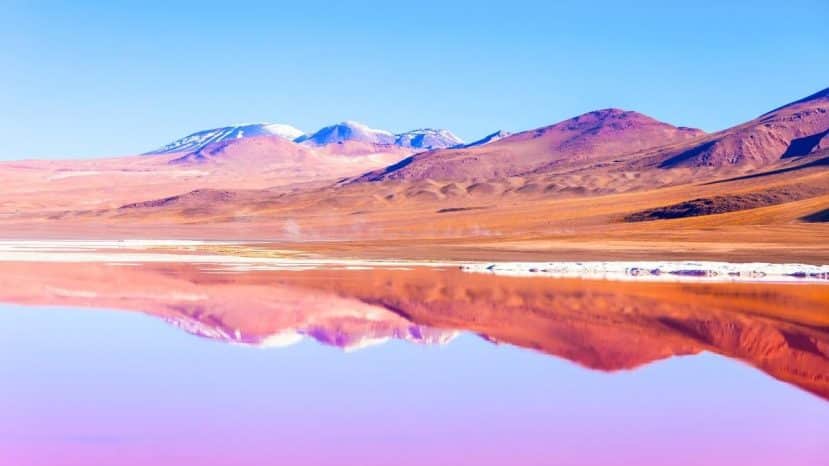


Perched at over 4,000 metres above sea level in the Bolivian Andes, Laguna Colorada offers every visitor a spectacle that few landscapes on earth can match. Its waters shift in hue with the seasons, the light and the weather, creating scenery that many liken to another planet entirely.
A Bolivian lake of ever-changing colours
Laguna Colorada sits at the heart of the Eduardo Avaroa Andean Fauna National Reserve in Bolivia. One of the country’s most iconic natural sites, its reputation stretches far beyond South American borders. Travellers from every corner of the world make the journey each year to witness this rare phenomenon.
What strikes you first is the sheer intensity of the contrasts. The water can display shades ranging from pale pink to deep red, passing through almost surreal oranges along the way. These colours cut sharply against the surrounding mountains and sky, creating a breathtaking atmosphere with every visit. And the scenery is in constant flux: no two visits are ever quite the same.
What explains the colour changes at Laguna Colorada
Contrary to what you might assume, the colour of the water is not simply a reflection of the sky. Several natural factors come into play simultaneously: the concentration of minerals, the presence of micro-organisms, the intensity of sunlight, temperature and evaporation levels. It is the interaction between all these elements that produces the hues visitors observe.
As the seasons shift, so does this balance. During certain periods, microscopic algae produce more intense pigments, turning the water a vivid red. At other times, the tones soften into gradients of pink, orange or brown. Wind and the movement of the water also play a part in this continuous transformation. The phenomenon intrigues scientists as much as it captivates photographers, much like other natural curiosities such as the dancing forest in Poland.
- The colour varies according to the mineral concentration in the water
- Microscopic algae produce pigments that intensify the red tones
- Temperature, sunlight and evaporation also influence the lake’s appearance
- Wind and water movement amplify the visual transformations
- Each season brings a different colour palette
Flamingos: the lake’s most iconic residents
Despite conditions that might appear hostile, life has adapted remarkably well to this high-altitude environment. Laguna Colorada is home to significant colonies of flamingos, which find abundant food here. The algae and small crustaceans that thrive in these mineral-rich waters make up their primary source of nourishment.
Watching these birds move across a surface tinged red or pink is a particularly powerful sight. The contrasts between the flamingos’ plumage, the colour of the water and the surrounding Andean landscape only deepen the sense of total otherworldliness that travellers so often describe.
When to visit Laguna Colorada for the most spectacular experience
The time of day plays a decisive role in the quality of the spectacle. Witnessing the lake at sunrise or sunset, when the colours reach their peak intensity, is an experience that many describe as one of the most beautiful natural sights in South America.
Despite growing popularity in 2026, the site retains a wild, unspoilt atmosphere. Laguna Colorada has lost none of its raw character, and that is precisely what continues to draw travellers in search of an authentic landscape, far from the well-worn tourist trail. For those who experience it, a visit to this singular Bolivian lake is one that is very hard to forget.