
Rethink the balance rather than adding more’: a pro fixes the foundation that settles into fine lines
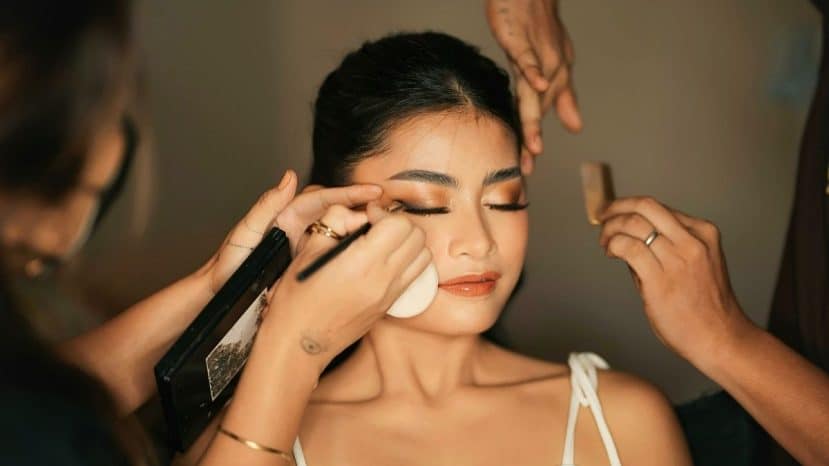


Your foundation looks perfect in the morning, then a few hours later it seems to have crept into every little line on your face. It’s a frustrating experience many people share, yet according to a professional makeup artist, it doesn’t have to be inevitable.
Why foundation migrates into fine lines
The main cause is often less obvious than you’d think. It’s not your age or the condition of your skin that’s to blame, but the texture of the product you’re using. Certain formulas that are too thick or too rigid sit on the surface rather than adapting to the natural movements of your face.
Over the course of the day, this type of product shifts and settles into fine lines. The result actually draws more attention to those lines, producing the exact opposite of the effect you were going for. Lighter, more hydrating formulas, on the other hand, move with the skin and help prevent that build-up.
The goal, then, isn’t to chase maximum coverage, but to find the right balance between an even finish, comfort, and a natural look. Switching up your texture alone can completely transform how your makeup holds up by the end of the day.
Three practical tweaks that make all the difference
Makeup trainer Mathieu Grandjean, quoted by Grazia Magazine, makes one key point: it’s about rebalancing hydration, product quantity, and setting, not piling on more. His approach comes down to three specific steps.
- Choose a light, hydrating texture so the product moves with your face rather than pooling in the lines.
- Limit translucent powder to only the areas that tend to get shiny, and apply the smallest amount possible.
- Finish with a setting mist, spritzed on after your foundation and powder, to meld the product layers together.
- Leave the rest of your face powder-free, to keep a luminous, natural finish.
These tweaks don’t require any extra time in front of the mirror. What they do require is unlearning a few deeply ingrained beauty habits.
Setting powder: friend or foe, depending on how much you use
Powder is often seen as a non-negotiable step for making makeup last. But when applied incorrectly, it can do the opposite. Too much of it concentrates in the areas where the skin moves most, around the eyes, nose, and mouth.
Rather than smoothing things out, it makes those areas look even more pronounced. The right approach is to use the tiniest amount, and only on the parts of your face prone to shine. That restraint lets you set your makeup without weighing it down or leaving the skin looking overly matte.
This method also keeps makeup comfortable throughout the day for skin that tends to dehydrate as the hours go by.
The setting mist: the step most routines are missing
After applying your foundation and powder, a few spritzes of the right mist can make a real difference. This step, absent from so many beauty routines, helps bind the different product layers together.
The finish you get tends to look more natural and less “made up.” In practice, that means a more flexible result that holds up better against facial movement without settling into fine lines. Because that’s really the point: makeup that lasts has to work in harmony with your skin, not against it.
In many cases, these small adjustments are all it takes to turn a disappointing wear into a finish that holds up comfortably from morning to night.