Just 2 hours from Paris, this Normandy town with cobbled lanes inspired the Impressionists
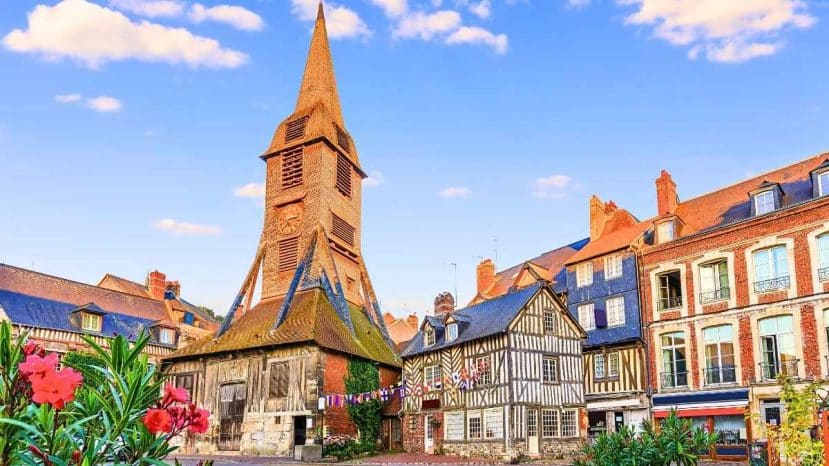


Imagine a morning spent strolling along a harbour where the reflections of houses shimmer in the still water of the basin, before climbing up to a viewpoint that takes in the entire Seine estuary in a single glance. Honfleur, a Normandy town in the Calvados department, offers exactly that experience, roughly 2 hours from Paris. And more often than not, those who plan an afternoon end up booking an extra night.
Art, light and estuary: why this Normandy town captivated painters
Before becoming an artistic destination, Honfleur was first and foremost a busy trading port from the Middle Ages onwards. The town served as a departure point for major expeditions to Canada and the Caribbean. That maritime past shaped its architecture and character long before artists ever set foot here.
In the 19th century, the singular light of the Seine estuary drew painters such as Eugène Boudin, Claude Monet and Gustave Courbet. They set up their easels on the quays and turned this small Norman port into a laboratory for experimentation. It was here, in part, that Impressionism was born. Boudin is honoured today in a dedicated museum, proof that the bond between the town and painting remains very much alive.
That ever-shifting light, which changes with the hours and the seasons, continues to draw curious visitors. It remains one of the reasons why this Norman town ranks among the most poetic destinations in France.
The Vieux Bassin and its houses: the architectural heart of Honfleur
The Vieux Bassin is the nerve centre of the town. Surrounding it stand tall, narrow houses clad in slate, some of which date back to the 16th century. The tightly packed façades, steep rooftops and cobbled lanes create an atmosphere that is at once maritime and deeply historical.
The reflections of these buildings in the harbour water form compositions that the Impressionist painters immortalised. Today, that setting remains intact and continues to tell the story of this Normandy town to every visitor who wanders through it.
Around the basin, art galleries and boutiques dot the lanes. You can extend your stroll between the boats and the shop windows before settling onto a terrace to enjoy freshly caught seafood or a local speciality.
What people actually come to Honfleur for
Honfleur is more than its harbour. Several sites deserve particular attention for anyone wanting to understand the deeper identity of this Normandy town.
- Église Sainte-Catherine, the largest wooden church in France, built by ship’s carpenters after the Hundred Years’ War.
- The Musée Eugène Boudin, dedicated to the painter born in the town, a central figure in the birth of Impressionism.
- La Côte de Grâce, the town’s high point, where a viewpoint and a chapel offer a panorama over the Seine estuary and the Pont de Normandie.
- The quays of the Vieux Bassin, lined with 16th-century houses, perfect for a leisurely walk between history and maritime atmosphere.
- The art galleries and boutiques surrounding the harbour, for rounding off the escape in an artistic spirit.
Église Sainte-Catherine is worth lingering in. Its construction in wood by ship’s carpenters after the Hundred Years’ War makes it a one-of-a-kind building in France. The technique used echoes that of boat hulls, giving it a silhouette and an acoustic quality that are entirely its own.
For those who prefer open air, La Côte de Grâce offers an alternative to a walk along the quays. Climbing up to the viewpoint reveals a spectacular panorama over the estuary and the Pont de Normandie, a vantage point that puts the town’s geography, caught between land and sea, into full perspective.
An escape that blends history, nature and the art of slow living
What makes this Normandy town so compelling is how much it packs into a small space. Within a few hours, you move from a medieval harbour to a wooden church, from an Impressionist museum to a panorama over the estuary. Each place tells a different facet of Honfleur’s story.
The food fits naturally into that logic. Sitting out on a terrace over freshly caught seafood is another way of deepening the connection with the sea that has defined the town’s identity since the Middle Ages. Because Honfleur is not just a pretty picture: it is a living port, whose past as a great trading town and artistic muse continues to enrich every visit in 2026.