
Espresso, cinnamon, grey hair: the hair colour trends dominating this autumn
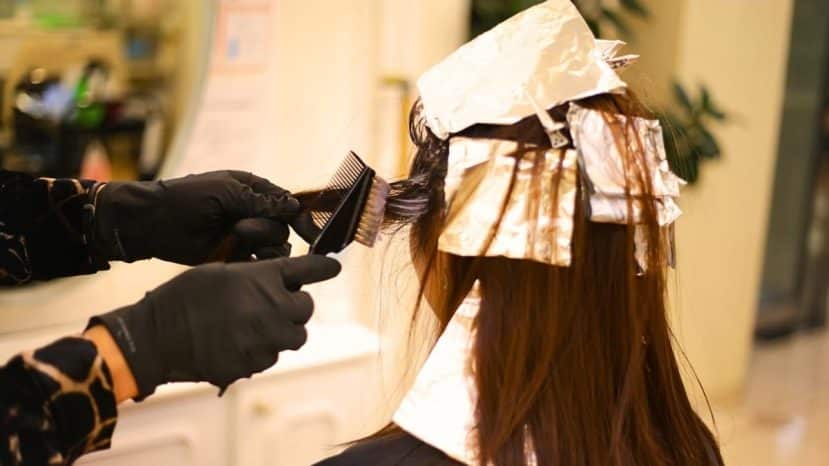


Coming out of summer with roots growing in and a craving for change, but not quite sure what to ask your colourist? This season’s hair colour trends answer that question precisely: shades that blend into your existing base rather than erasing it, for a result that looks natural and lasts.
Upkeep and longevity: what you do at home matters as much as the salon
A fresh hair colour can stay vibrant for up to eight weeks without fading, provided you adopt the right habits as soon as you get home. Spacing out your washes limits colour bleed, and avoiding overly hot water slows pigment loss, especially with warm-toned shades.
Your choice of products plays an equally decisive role. Some professional formulas are available to buy directly, designed to extend the life of your colour between appointments. The L’Oréal Professionnel Serie Expert Vitamino Color range, formulated with resveratrol, includes a shampoo, a mask and a leave-in treatment. This complete routine is designed to prevent dullness and maintain colour brilliance for eight weeks.
Espresso, cinnamon, grey hair: the three hair colours to know this autumn
Three shades are making their mark in salons this season. Espresso brown delivers rich depth with a subtle shine. It adds density to the hair without looking flat, and the result feels almost natural because it builds up reflection by reflection.
Cinnamon is stepping in where pumpkin spice left off. This spiced shade is endlessly adaptable: a few blonde highlights brighten it up, while a shift towards auburn deepens it. It is a versatile tone that suits a wide range of profiles.
Finally, embraced grey hair signals a genuine shift in perspective this season. Rather than systematically covering regrowth, glossy, blended highlights are used to soften and enhance it. The approach celebrates your natural base instead of concealing it.
Which shade suits your profile?
Not every shade works for every person, and that is often where things go wrong. A cool, fair complexion does not pair well with a very warm red, which risks pulling orange rather than the desired copper. On olive or golden skin tones, however, shades like espresso and cinnamon come fully into their own.
Your hair’s existing condition matters as much as your complexion. Previously coloured hair has a different porosity to virgin hair, and colour deposits can influence the final result, particularly when going from blonde to brunette or vice versa. Natural hair offers more flexibility, but some shades require patience to achieve without compromising the fibre.
When in doubt, one simple rule applies: staying within one or two tones of your natural base reduces the risk of unwanted surprises. A dramatic change, on the other hand, calls for several sessions to keep the hair fibre healthy.
- Cool complexion: avoid overly warm reds that pull orange.
- Olive or golden skin: espresso and cinnamon come fully into their own.
- Previously coloured hair: porosity and colour deposits affect the final result.
- Natural hair: more flexibility, but some shades require multiple sessions.
- Dramatic change: plan several appointments to avoid weakening the hair fibre.
Why professional hair colouring really does make the difference
A colourist never applies a single, uniform shade across the entire head of hair. They adjust the concentration by zone: denser at the roots, lighter through the lengths, sometimes combining three shades to catch the light and avoid a flat result. That level of precision is difficult to replicate at home.
Professional ranges such as those from L’Oréal Professionnel are designed for these bespoke blends, with textures that protect the hair fibre. The initial diagnosis, the precise mixing ratios and the processing time adjusted to the minute are all part of a process that only a colourist can carry out correctly, because they see what you simply cannot from your own mirror.
Knowing what to ask before you walk into the salon changes everything. Understanding the season’s key shades, knowing what works for your base and planning your at-home maintenance in advance is what turns a simple hair colour appointment into a result that truly lasts.